2026.09.29 | Substack | Agents | Meta Muse Skills: Public Cos Behind It
原标题:Deep|Meta Muse: The Software Companies Behind Its Actions (Part 1: Public Companies)
25 software products from 24 listcos that Muse is leveraging on
We went under the hood of Muse to see which software services it calls as it carries out a user’s request. We followed the steps from finding information and accessing accounts to making calls, managing bookings and returning a result, then linked those steps to the companies behind the software. This first part covers 25 products from 24 listed companies. It shows where Muse could bring more activity to existing communication, productivity, travel, commerce and connected-device services—and where we can currently confirm only that a connection exists.
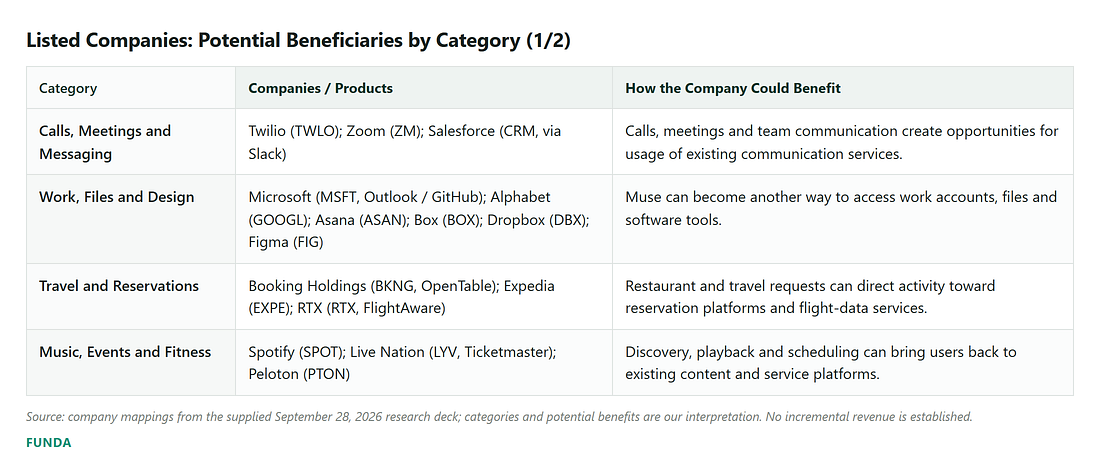
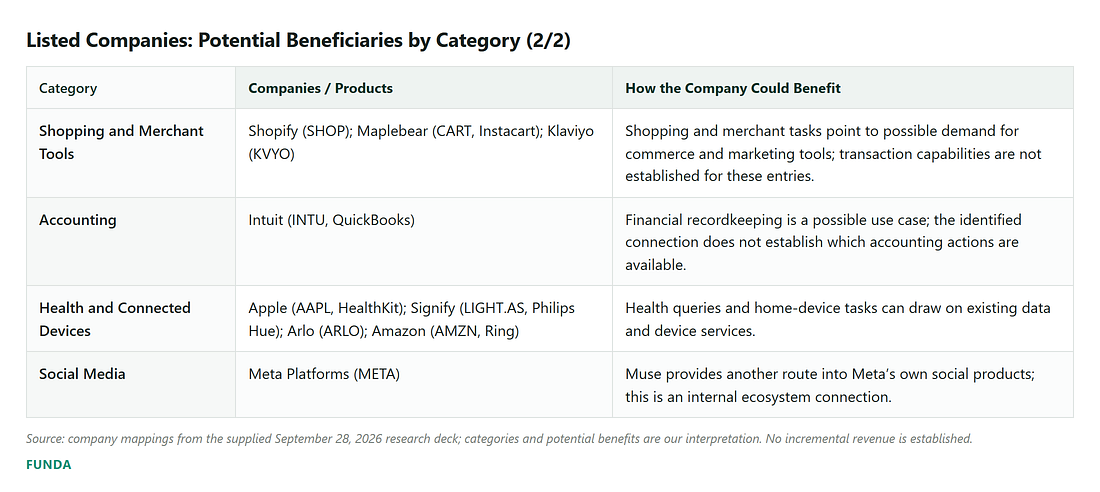
Potential Beneficiaries by Category
The table groups the companies by the role their products could play in Muse tasks. These are potential beneficiaries: an integration does not, by itself, show additional revenue, a commercial agreement or how often the service is used.
How to Read This Guide
We looked at the software connections and task instructions available in Muse as of September 28, 2026. For each product, we show what Muse can call, where approval is needed and how it checks the result. The labels describe how much we could confirm, not how much revenue a company might earn.
- Tested Workflow: We checked the sequence of calls and key results through code testing.
- Documented Workflow: The available instructions describe the steps, but we have not confirmed the full sequence through testing.
- Connection Identified: We found a dedicated connection to the product. Its detailed capabilities are not disclosed, so we do not assume them.
Products are linked to their listed parent companies, so Outlook and GitHub both count toward Microsoft. The company count is therefore smaller than the product count.
How a Muse Task Reaches a Software Company
The basic sequence is similar across products: the user asks for something, Muse selects a service, any required approval is collected, and the service returns a result.

Looking up information. Muse usually reads information within the access the user has already granted. A new connection may require the user to sign in first.
Taking action. Sending, publishing, buying, canceling or deleting may require the user to approve the action.
Checking the outcome. Muse needs a returned result—such as a confirmed reservation—to know the task succeeded. Starting a request is not the same as completing it.
Product-by-Product Breakdown
01. Twilio Telephony
Twilio · TWLO · Tested Workflow
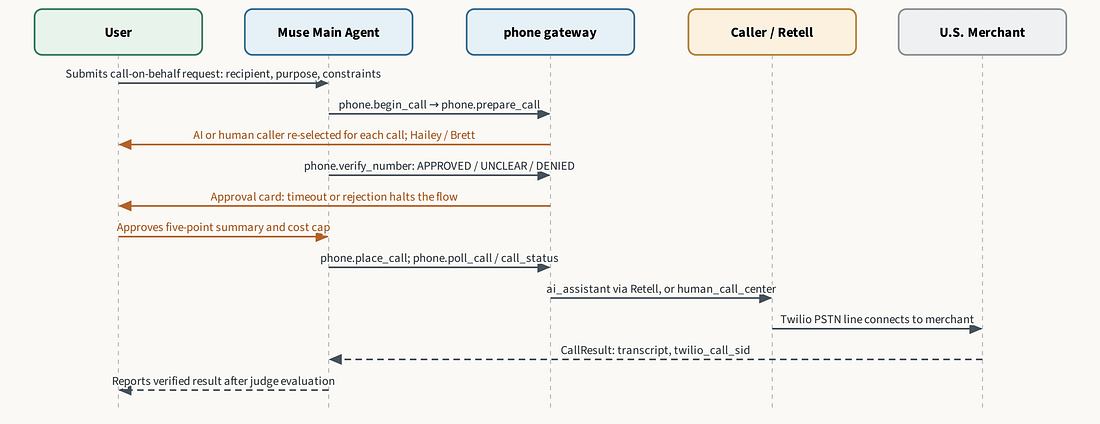
From user approval to merchant pickup, AI and human callers ultimately route through Twilio lines
How It Works
- The merchant’s public number is verified first; UNCLEAR requires supplemental web evidence, and DENIED terminates the flow.
- After the call, phone_call_judge and recipient_annoyance run in parallel before the call result is delivered.
- The approval card is a non-bypassable human control point; any change in cost or recipient requires reconfirmation.
- Product boundaries: U.S. merchants only; no cold calls; cannot receive inbound calls or send text messages.
What We Found
twilio_call_sid; phone.* tool family; CallProvider=retell
Phone tools are not enabled for the current account and remain gated under early access (code is present but not enabled at runtime).
02. OpenTable Restaurant Reservations
Booking Holdings · BKNG · Tested Workflow
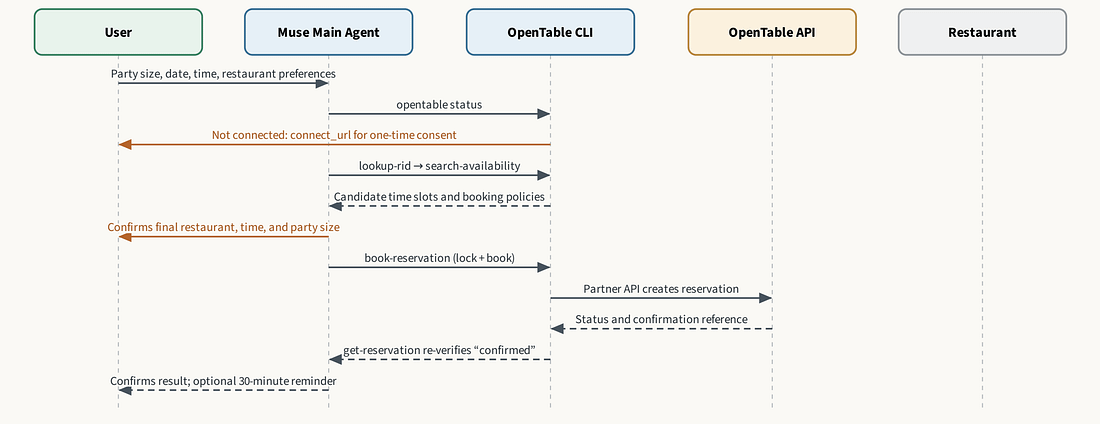
Searches availability, locks and books a slot, verifies confirmation, and supports modifications and cancellations
How It Works
- If the connection fails, only the official link, alternative platform options, or a phone fallback can be returned.
- Modifications go through modify-reservation-with-lock; cancellations go through cancel-reservation.
- book-reservation combines the slot lock and booking into a single action, but status must still be re-verified.
- A reservation may be described as “booked” only when an explicit confirmed status is returned.
What We Found
opentable.sock; book-reservation; modify-reservation-with-lock
03. Spotify Music & Podcasts
Spotify Technology · SPOT · Tested Workflow
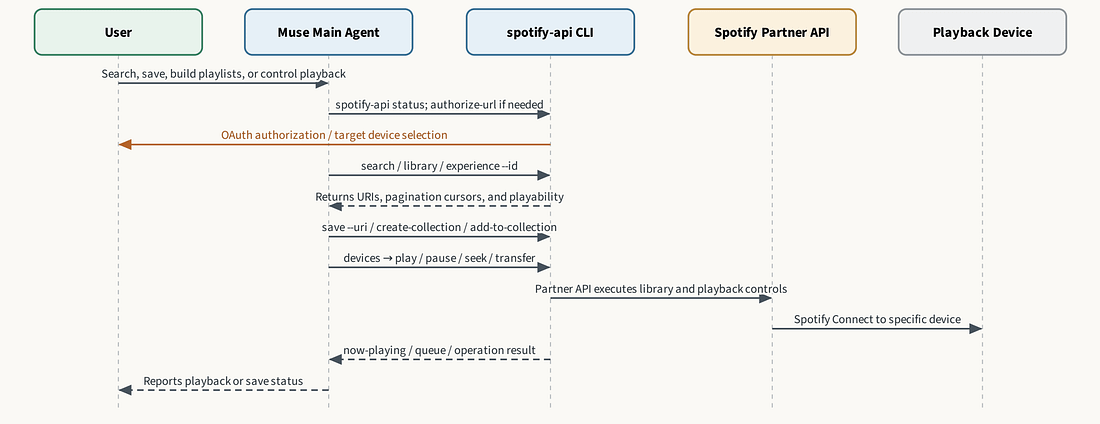
After OAuth connection, supports discovery, saving, playback control, and content cleanup
How It Works
- Exact track searches use the “track by artist” format to avoid matching cover versions.
- Podcast/show removal is handled by the save-to-spotify CLI and is kept separate from general library operations.
- Playback and queueing typically require an active Spotify Connect device; explicitly specifying the device is preferred.
- On a wearable cold start, a music_fulfillment is generated first and then executed by the device.
What We Found
spotify-api.sock; save-to-spotify.sock; Spotify Partner API CLI
04. FlightAware Flight Data
RTX (via Collins Aerospace / FlightAware) · RTX · Documented Workflow
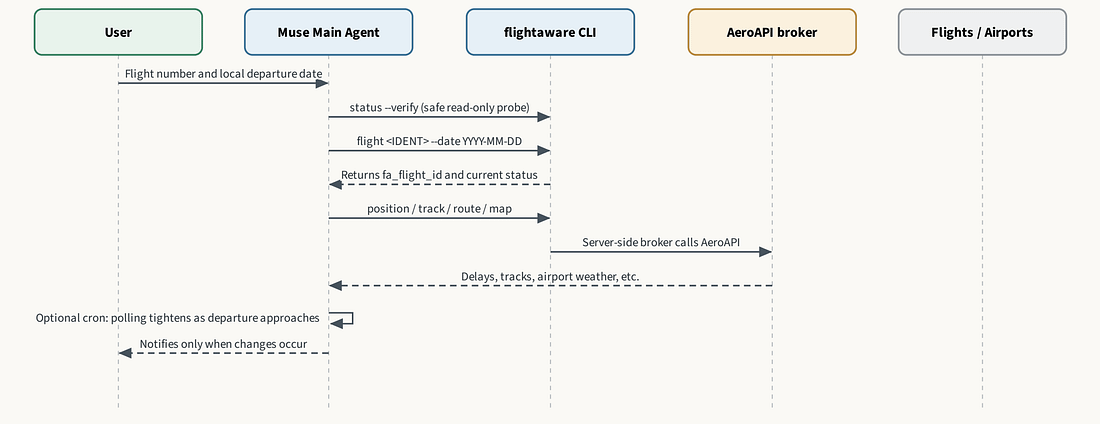
Reads flight status, tracks, airports, and future schedules, with time-window-based monitoring
How It Works
- Use flight for current and near-term flights; use schedules for dates further out.
- Scheduled checks are orchestrated by Muse; FlightAware only supplies data for each query.
- Recommended cadence: daily when more than 48 hours out, hourly within 48 hours, and every 10–15 minutes within 6 hours of departure.
What We Found
flightaware.sock; flightaware CLI; AeroAPI
05. Ticketmaster Event Discovery
Live Nation Entertainment · LYV · Documented Workflow
Searches events and seat recommendations; transactions must be completed via an external Buy-now link

How It Works
- Muse can retrieve events, event details, and seat and pricing recommendations.
- Key boundary: purchases are not completed within Muse under this integration; the user executes the final transaction on an external page.
- seat-view-carousel is display-only and does not change order status.
What We Found
ticketmaster.sock; search-events; top-picks; seat-view-carousel
06. Peloton Classes & Scheduling
Peloton Interactive · PTON · Documented Workflow
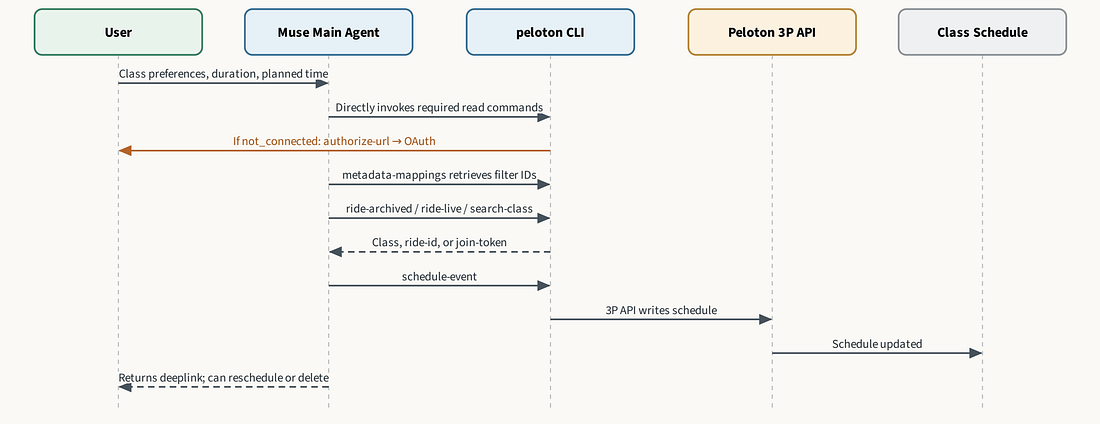
From class search to scheduling, with support for rescheduling and deletion
How It Works
- Standard class reads call the target command directly without a status pre-check; authorization is triggered only when not_connected.
- On-demand classes use ride-id + scheduled-start-time; live classes use join-token.
- metadata-mappings is retrieved first to avoid hardcoding instructor or class type IDs.
- Subsequent changes are managed via reschedule-event or delete-scheduled-event.
What We Found
peloton.sock; Peloton 3P API helper CLI
07. Philips Hue Smart Lighting
Signify · LIGHT.AS · Documented Workflow
Discovers devices and controls lights, rooms, and scenes via Hue Remote API v2

How It Works
- OAuth connection and Bridge pairing are two separate stages.
- Color, color temperature, brightness, and dynamic effects are passed as explicit parameters.
- Control actions support individual lights, room/zone groups, and scene activation.
What We Found
philips-hue.sock; Philips Hue Remote API v2 CLI
08. Microsoft Outlook
Microsoft · MSFT · Documented Workflow
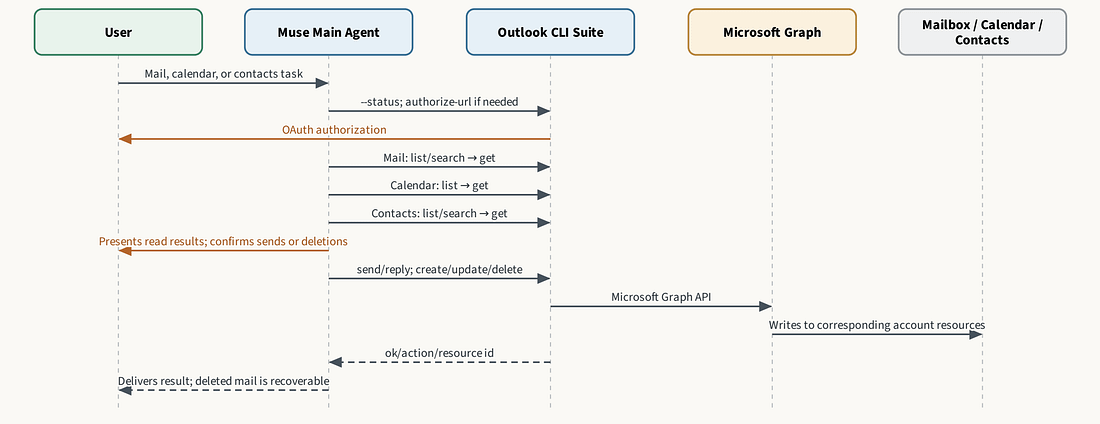
Mail, calendar, and contacts are written to Microsoft Graph through three isolated connectors
How It Works
- Mail supports sending, replying, flagging, and moving items to Deleted Items.
- The three connectors are separate: outlook-mail, outlook-calendar, and outlook-contacts.
- Calendar supports create, update, and delete; Contacts supports create, update, and delete.
What We Found
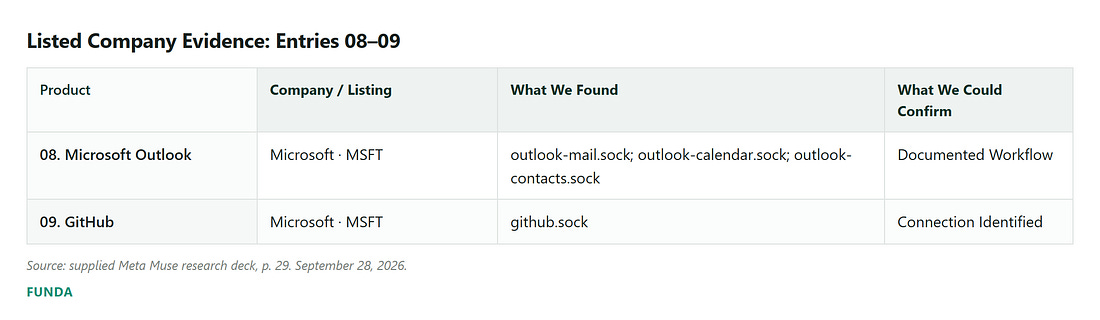
outlook-mail.sock; outlook-calendar.sock; outlook-contacts.sock
09. GitHub
Microsoft · MSFT · Connection Identified
A dedicated connections confirms the integration exists; business subcommands are not disclosed
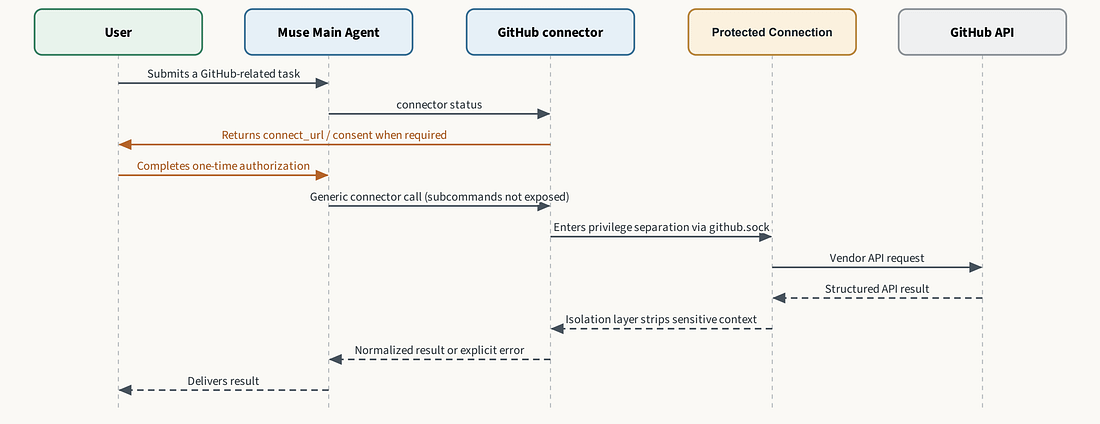
How It Works
- Deterministic evidence extends only to the dedicated github.sock.
- Accordingly, we do not infer the writable scope, human confirmation points, or actual API endpoints.
- Currently published skills do not expose command contracts for repositories, Issues, or Pull Requests.
What We Found
github.sock
Connection Identified (no public skill for this product; command details not exposed)
10. Google Workspace
Alphabet · GOOGL · Documented Workflow
Gmail, Calendar, and Drive share an isolated CLI, with reads and writes routed by resource type
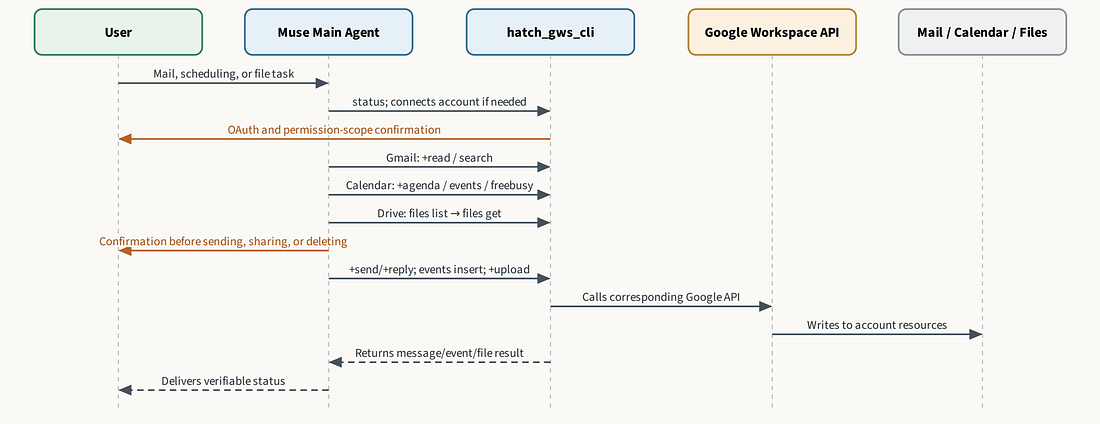
How It Works
- Gmail drafts require approval of the exact text before sending; archiving, labeling, and unsubscribing are also supported.
- Drive supports upload, update, copy, and share; permanent deletion requires explicit confirmation.
- Calendar checks availability via freebusy, then inserts, patches, or deletes events.
What We Found
hatch-gws-cli-fully-isolated.sock; Gmail/Calendar/Drive skills  Subscribed
11. Apple HealthKit
Apple · AAPL · Documented Workflow
After device sync, queries daily summaries, raw samples, and sleep/workout sessions
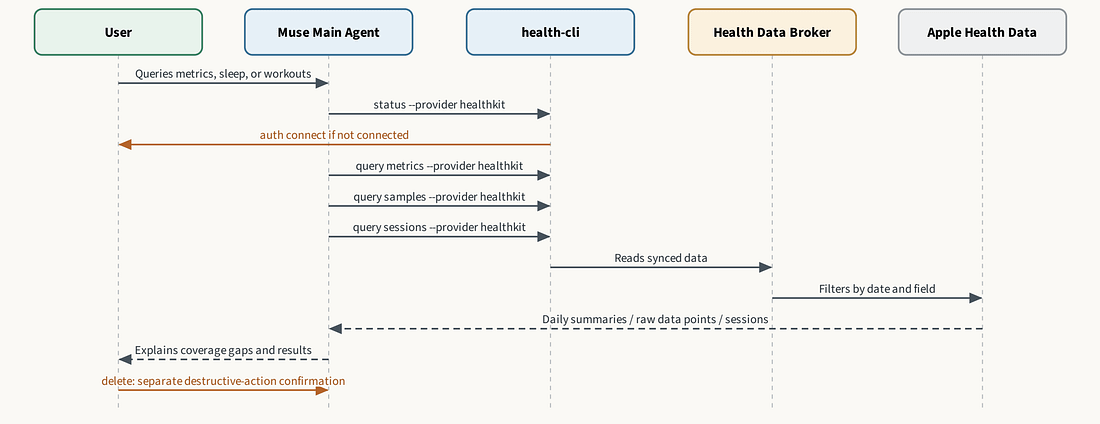
How It Works
- metrics are full-day summaries; samples are unbucketed heart rate, step count, GPS, and sleep-stage data points.
- delete erases stored records and is a separate destructive action.
- sessions treat each sleep or workout as a discrete session.
What We Found
healthkit-cli.sock; health-cli --provider healthkit; manifest actions
12. Meta Social Products
Meta Platforms · META · Documented Workflow
Facebook, Instagram, Messenger, and Threads read content independently; outbound publishing and message changes are approval-gated

How It Works
- Facebook Marketplace create/edit/delete/publish actions are write operations.
- Messenger syncs first, then reads by cid; mutations require approval, and output masks raw IDs.
- For Instagram reads and writes, the user’s owned account is first selected via accounts.
- Threads first selects the account via threads-cli accounts; feed is read-only, and every publish-post requires approval.
What We Found
facebook-cli.sock; instagram-cli.sock; messenger.sock; threads-cli.sock; threads-messages-cli.sock
Meta also operates a separate first-party meta-ads-cli.sock (ad platform connector); it is likewise attributable to META but is not charted separately.
13. Asana
Asana · ASAN · Connection Identified
Project and task management: a dedicated connections confirms a product-level integration
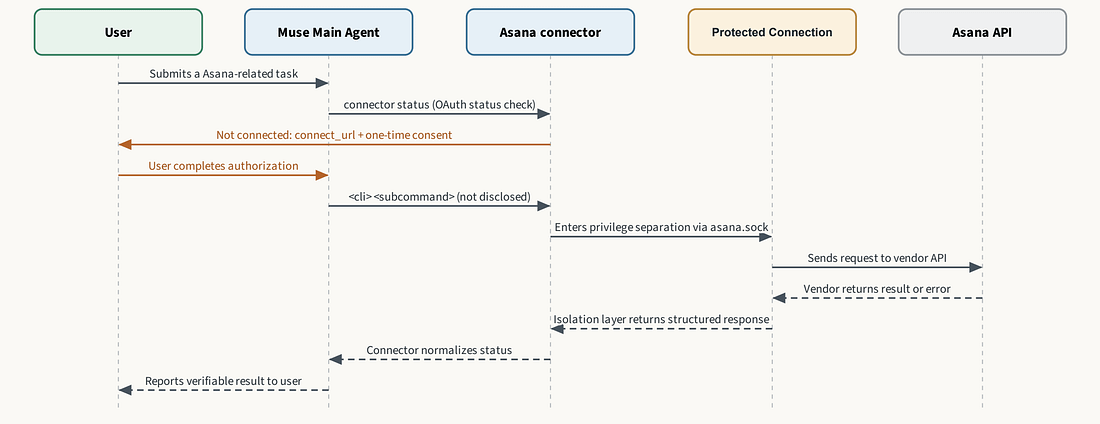
How It Works
- A clearly named asana.sock exists and maps definitively to Asana.
- No SKILL.md for this product exists in the public directory; accordingly, we do not infer specific business subcommands.
- The standard connection path comprises a status check, OAuth consent, isolated execution, and result return.
What We Found
asana.sock
Connection Identified (no public skill for this product; command details not exposed)
14. Box
Box · BOX · Connection Identified
Enterprise cloud content and file collaboration: a dedicated connections confirms a product-level integration

How It Works
- A clearly named box-cli.sock exists and maps definitively to Box.
- No SKILL.md for this product exists in the public directory; accordingly, we do not infer specific business subcommands.
- The standard connection path comprises a status check, OAuth consent, isolated execution, and result return.
What We Found
box-cli.sock
Connection Identified (no public skill for this product; command details not exposed)
15. Dropbox
Dropbox · DBX · Connection Identified
Cloud file sync and sharing: a dedicated connections confirms a product-level integration
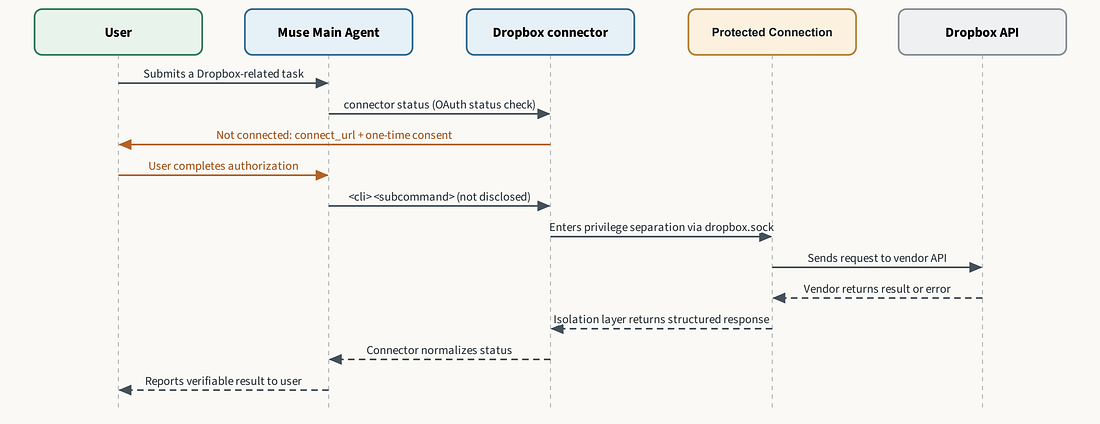
How It Works
- A clearly named dropbox.sock exists and maps definitively to Dropbox.
- No SKILL.md for this product exists in the public directory; accordingly, we do not infer specific business subcommands.
- The standard connection path comprises a status check, OAuth consent, isolated execution, and result return.
What We Found
dropbox.sock
Connection Identified (no public skill for this product; command details not exposed)
16. Expedia
Expedia Group · EXPE · Connection Identified
Travel search and booking: a dedicated connections confirms a product-level integration
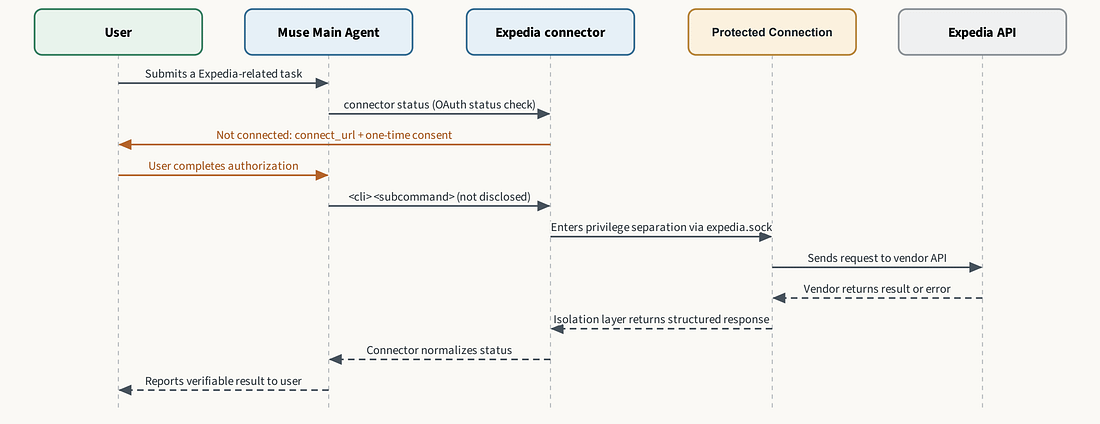
How It Works
- A clearly named expedia.sock exists and maps definitively to Expedia.
- No SKILL.md for this product exists in the public directory; accordingly, we do not infer specific business subcommands.
- The standard connection path comprises a status check, OAuth consent, isolated execution, and result return.
What We Found
expedia.sock
Connection Identified (no public skill for this product; command details not exposed)
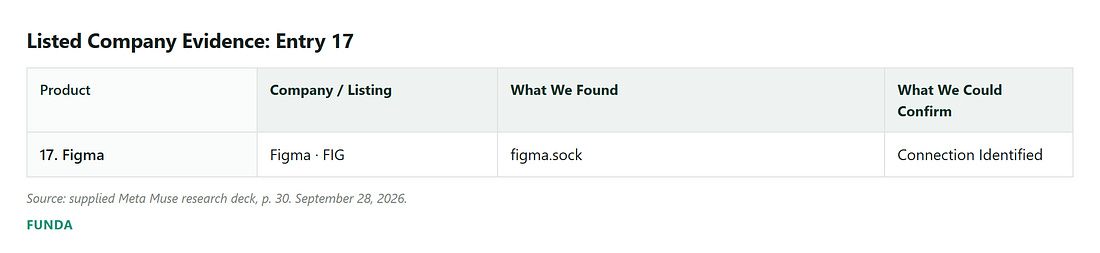
17. Figma
Figma · FIG · Connection Identified
Collaborative design files: a dedicated connections confirms a product-level integration
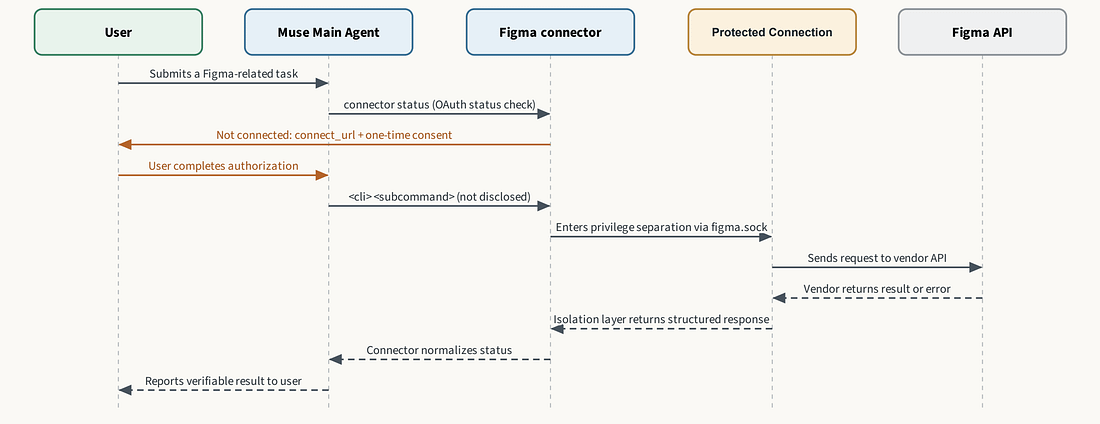
How It Works
- A clearly named figma.sock exists and maps definitively to Figma.
- No SKILL.md for this product exists in the public directory; accordingly, we do not infer specific business subcommands.
- The standard connection path comprises a status check, OAuth consent, isolated execution, and result return.
What We Found
figma.sock
Connection Identified (no public skill for this product; command details not exposed)
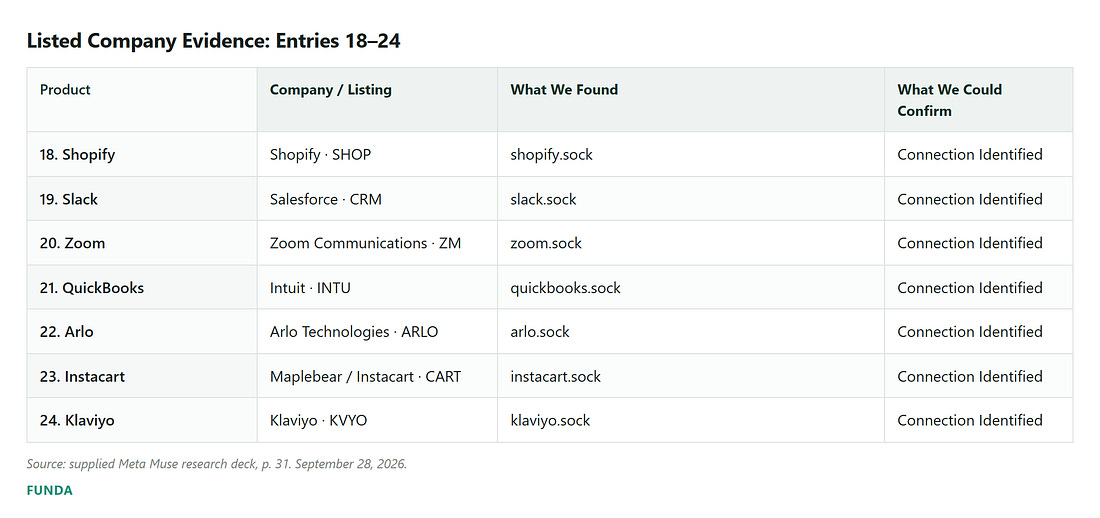
18. Shopify
Shopify · SHOP · Connection Identified
Merchant, e-commerce, and checkout: a dedicated connections confirms a product-level integration
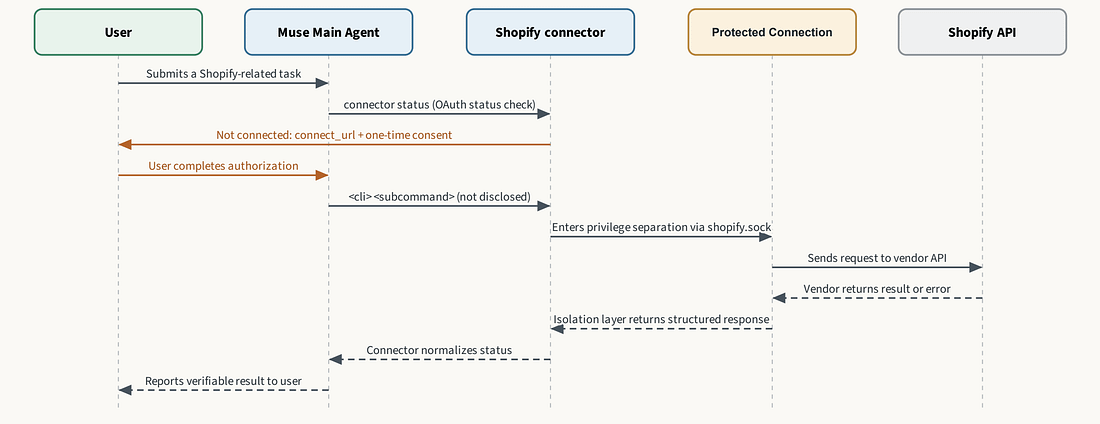
How It Works
- A clearly named shopify.sock exists and maps definitively to Shopify.
- No SKILL.md for this product exists in the public directory; accordingly, we do not infer specific business subcommands.
- The standard connection path comprises a status check, OAuth consent, isolated execution, and result return.
What We Found
shopify.sock
Connection Identified (no public skill for this product; command details not exposed)
19. Slack
Salesforce · CRM · Connection Identified
Enterprise messaging and collaboration: a dedicated connections confirms a product-level integration
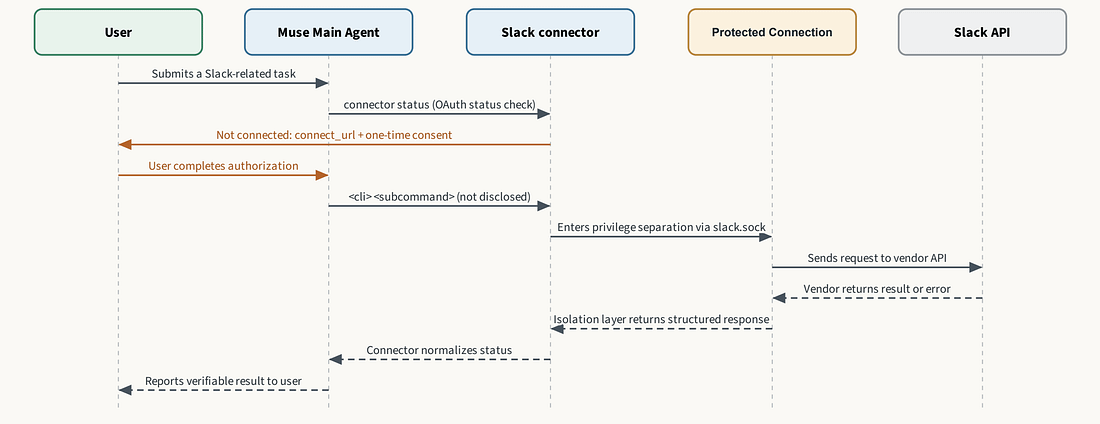
How It Works
- A clearly named slack.sock exists and maps definitively to Slack.
- No SKILL.md for this product exists in the public directory; accordingly, we do not infer specific business subcommands.
- The standard connection path comprises a status check, OAuth consent, isolated execution, and result return.
What We Found
slack.sock
Connection Identified (no public skill for this product; command details not exposed)
20. Zoom
Zoom Communications · ZM · Connection Identified
Video conferencing and collaboration: a dedicated connections confirms a product-level integration
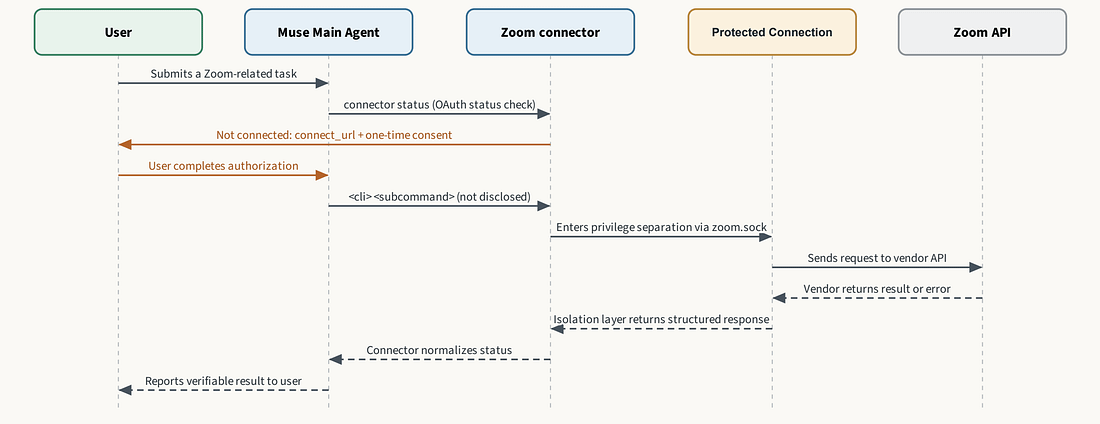
How It Works
- A clearly named zoom.sock exists and maps definitively to Zoom.
- No SKILL.md for this product exists in the public directory; accordingly, we do not infer specific business subcommands.
- The standard connection path comprises a status check, OAuth consent, isolated execution, and result return.
What We Found
zoom.sock
Connection Identified (no public skill for this product; command details not exposed)
21. QuickBooks
Intuit · INTU · Connection Identified
Accounting and financial records: a dedicated connections confirms a product-level integration
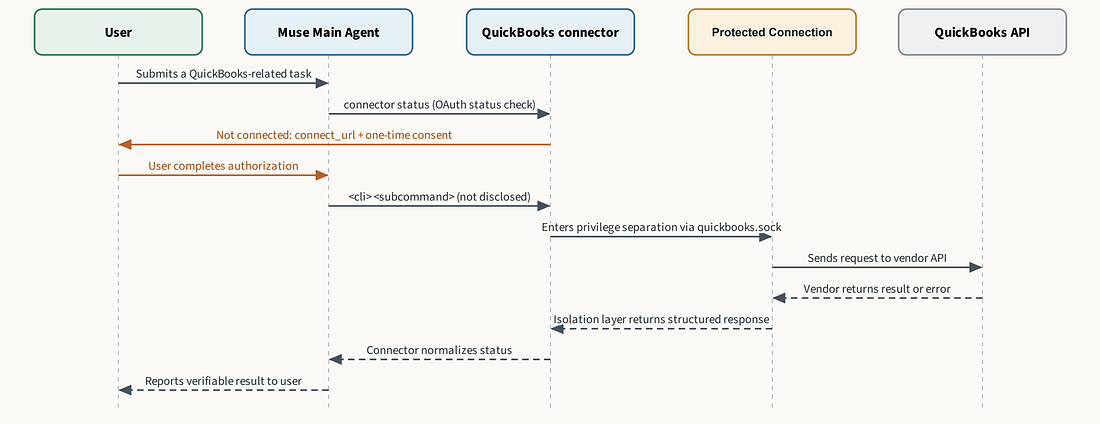
How It Works
- A clearly named quickbooks.sock exists and maps definitively to QuickBooks.
- No SKILL.md for this product exists in the public directory; accordingly, we do not infer specific business subcommands.
- The standard connection path comprises a status check, OAuth consent, isolated execution, and result return.
What We Found
quickbooks.sock
Connection Identified (no public skill for this product; command details not exposed)
22. Arlo
Arlo Technologies · ARLO · Connection Identified
Home security cameras: a dedicated connections confirms a product-level integration
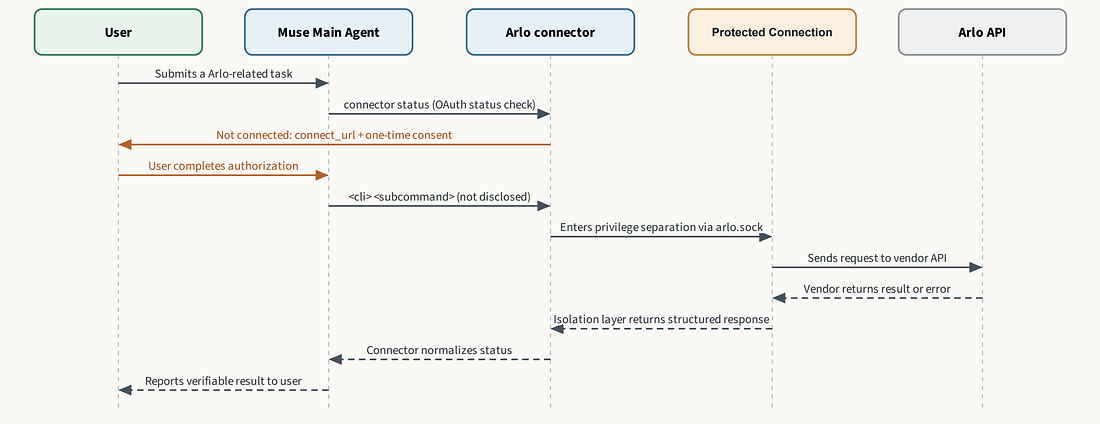
How It Works
- A clearly named arlo.sock exists and maps definitively to Arlo.
- No SKILL.md for this product exists in the public directory; accordingly, we do not infer specific business subcommands.
- The standard connection path comprises a status check, OAuth consent, isolated execution, and result return.
What We Found
arlo.sock
Connection Identified (no public skill for this product; command details not exposed)
23. Instacart
Maplebear / Instacart · CART · Connection Identified
Grocery shopping and fulfillment: a dedicated connections confirms a product-level integration
How It Works
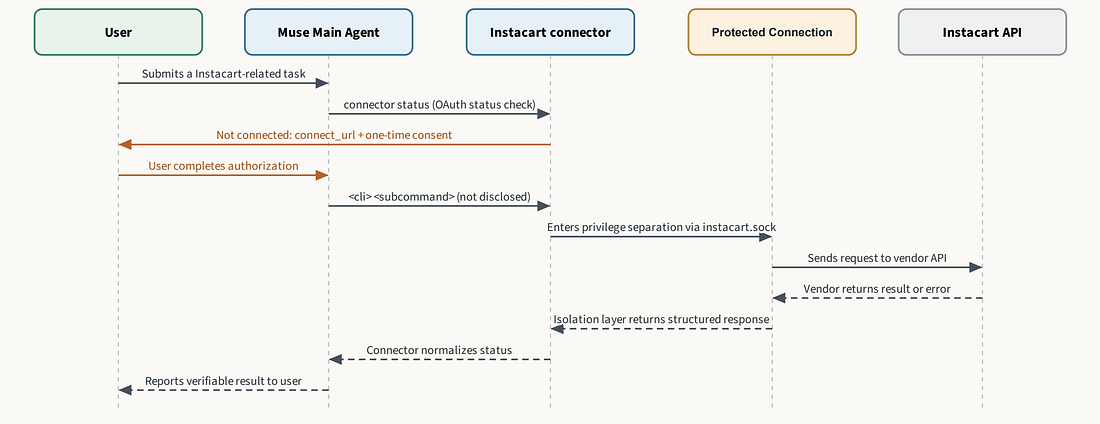
- A clearly named instacart.sock exists and maps definitively to Instacart.
- No SKILL.md for this product exists in the public directory; accordingly, we do not infer specific business subcommands.
- The standard connection path comprises a status check, OAuth consent, isolated execution, and result return.
What We Found
instacart.sock
Connection Identified (no public skill for this product; command details not exposed)
24. Klaviyo
Klaviyo · KVYO · Connection Identified
Marketing automation: a dedicated connections confirms a product-level integration
How It Works
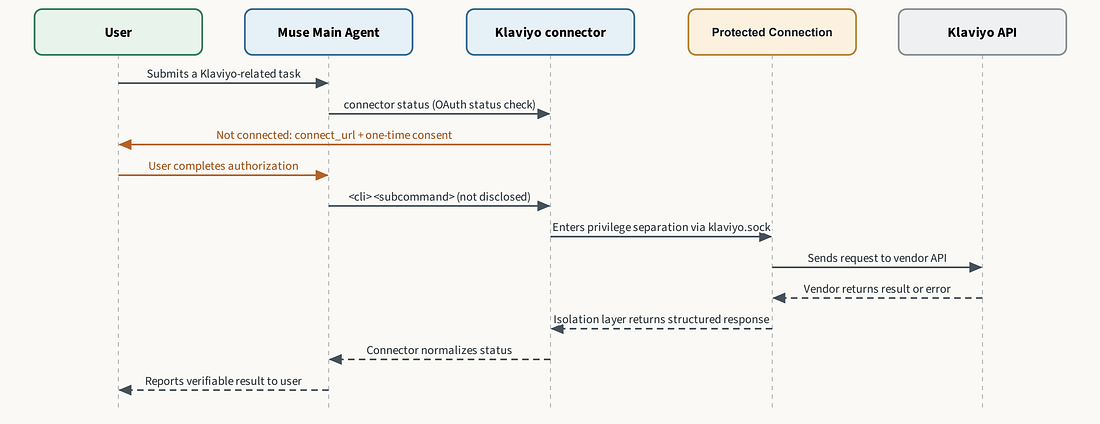
- A clearly named klaviyo.sock exists and maps definitively to Klaviyo.
- No SKILL.md for this product exists in the public directory; accordingly, we do not infer specific business subcommands.
- The standard connection path comprises a status check, OAuth consent, isolated execution, and result return.
What We Found
klaviyo.sock
Connection Identified (no public skill for this product; command details not exposed)
25. Ring
Amazon · AMZN · Connection Identified
Video doorbells and home security: a dedicated connections confirms a product-level integration
How It Works
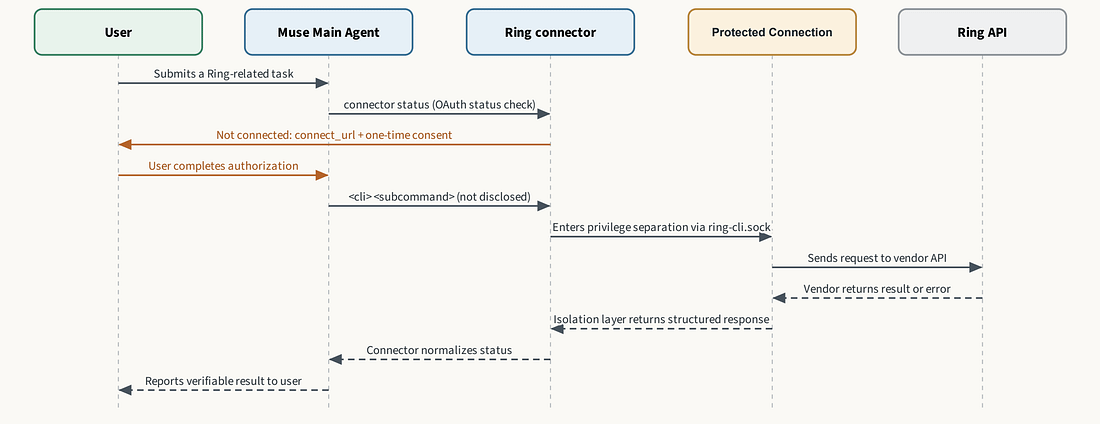
- A clearly named ring-cli.sock exists and maps definitively to Ring.
- No SKILL.md for this product exists in the public directory; accordingly, we do not infer specific business subcommands.
- The standard connection path comprises a status check, OAuth consent, isolated execution, and result return.
What We Found
ring-cli.sock
Connection Identified (no public skill for this product; command details not exposed)
Company and Connection Summary
Each row links a product to its company and what we found in Muse. Company classifications and tickers follow the September 28, 2026 research snapshot.



Disclaimer and Terms of Use
Analyst Independence Statement
The views expressed in this report accurately reflect the personal and independent views of the analyst(s) regarding the securities and issuers discussed herein. No part of the analyst’s compensation was, is, or will be directly or indirectly related to the specific recommendations or views expressed in this report. The Company adheres to strict compliance procedures to ensure the integrity, security, and legality of the data sources and information utilized.
About FUNDA
Consensus AI Technology Pte. Ltd. (the “Company” or “FUNDA”) is an independent research firm incorporated in Singapore. The Company is not affiliated with any securities dealer, investment bank, or asset management firm, nor is it registered as an investment advisor or broker-dealer in any jurisdiction. The Company does not have any investment banking or underwriting relationship with the companies covered in this report, and does not accept sponsorship or funding from publicly listed companies.
No Investment Advice and Report Neutrality
The contents of this report and the information contained herein are for informational purposes only and do not constitute investment advice or a basis for business decisions. The views expressed herein represent solely the personal opinions of the respective authors at a specific point in time and do not reflect the position of FUNDA. As an independently operated platform, FUNDA maintains a neutral third-party status and makes no express or implied warranties regarding the accuracy, completeness, or applicability of such views.
No Offer or Solicitation: This report does not constitute an offer, solicitation, recommendation, or advice to buy, sell, or hold any securities or financial instruments, nor does it provide any legal, tax, or accounting advice.
Third-Party Data: All third-party data cited in this report is derived from public or authorized sources. The Company makes no representations or warranties, express or implied, as to the accuracy or completeness thereof.
Non-Participation in Decision-Making: The Company does not participate, directly or indirectly, in the investment decision-making process of its clients or readers. Readers should make independent investment decisions based on their own investment objectives and financial circumstances, and consult professional financial or legal advisors prior to executing any transactions.
Timeliness Statement
Given the rapid changes in market environments and technological trends, this report reflects market conditions as of the date prior to its publication. Relevant information may become outdated over time. FUNDA has no obligation to update the contents of this report in real-time.
Intellectual Property, Confidentiality, and Restrictions on Commercial Use
All reports, data, models, and content provided by the Company constitute its exclusive proprietary intellectual property and are protected by copyright and intellectual property laws.
Ownership of Rights: Unless otherwise expressly stipulated in a written agreement, all intellectual property rights (including copyrights) arising from or relating to this report are exclusively owned by the Company.
Authorized Use: Institutional clients may use this report internally within the scope permitted by their internal compliance policies; however, disclosure or sharing with any third party is strictly prohibited.
Prohibition on Commercial Use: Without the prior express written consent of the Company, no individual or entity may reproduce, republish, distribute, resell, repackage, or otherwise use this report or any part thereof for any commercial or profit-making purpose.
Legal Recourse: The Company reserves the right to pursue all available legal remedies and claims against any unauthorized commercial use, redistribution, or infringement of its intellectual property rights.
Forward-Looking Statements and Disclaimer
This report may contain forward-looking statements, including forecasts, estimates, and analyses of industry trends. Such statements are subject to risks and uncertainties that may cause actual results to differ materially from those anticipated. The Company shall not be liable for any direct, indirect, or consequential losses arising from the use of or reliance on the contents of this report.
Invite your friends and earn rewards
If you enjoy FUNDA, share it with your friends and earn rewards when they subscribe.
Invite Friends