2026.10.04 | Substack | Cloud | Hyperscaler Stock Bucket & Weights
原标题:My Hyperscaler Bucket. Which Stocks I Want to Own, At What Weight, and Why.
I want meaningful investment exposure to Hyperscalers over the coming years.
That part has been clear to me for the past few weeks and I have been steadily building my positions.
But exactly how much exposure to each, and what my expected returns would be have taken me longer to figure out.
I have been heavily invested in companies that benefitted from Hyperscaler capex for the AI infra buildout.
So I took time to understand the other side of that investment.
When I started this research I really initiated it based on my own experiences.
I am already asking assistants questions I used to search for.
Shopping can begin inside a conversation before I open a retailer’s site.
Inside businesses, software is starting to take on work that used to require someone to move between several applications.
Those changes can create entirely new revenue streams, but they can also move profit away from businesses that look dominant today.
That is what I wanted to work through here.
I went company by company and asked where AI can actually increase earnings over the next couple of years, what each business already owns that becomes more valuable as agents improve, and how much capital has to be spent to get there.
I built a 2028 model for each name so I could put some numbers behind the thesis. I use those 2028 earnings as the forward anchor for my 12-month targets that I will also lay out.
The full Meta section is pre-paywall because I think it shows the kind of work I am trying to do with these reports.
Microsoft, Alphabet, Amazon and Oracle follow for paid subscribers.
I save the portfolio weights for the end so you can see how I got there before seeing the answer.
There are so many different aspects of these companies and my goal is not to discuss all of them. I tried to keep it (somewhat) concise and discuss talking points that are front of mind for me. But when I run my valuations, of course the entire business is accounted for.
Let’s dig in!
This report is provided for informational and educational purposes only and should not be considered financial, investment, tax, legal, or accounting advice. Nothing in this report is a recommendation or solicitation to buy, sell, or hold any security, nor should any discussion of portfolio weights, price targets, valuation ranges, entry levels, expected returns, or investment strategies be interpreted as personalized investment advice.
Meta
The AI thesis has many ways to work.
Meta has billions of people inside Facebook, Instagram, WhatsApp and Messenger, and the advertising machine is already enormous.
AI can create value inside a customer relationship Meta already owns. If recommendations improve, people spend more time inside the products. And if the ad system gets better at deciding what to show and how to show it, advertisers can make more money from the same budget and put more dollars back through Meta.
And yes we already have proof of this happening, alongside a very strong core business. Q2 revenue grew 28% to $60.8 billion, ad impressions rose 14%, and average price per ad increased 12%. Meta is pushing AI much deeper into recommendations and advertising while the underlying engine is still growing very quickly.
Let’s check out their internal use of agents to understand this relationship a bit better. Meta’s Ranking Engineer Agent can run experiments on the systems used to rank ads, then use earlier results to guide the next round of work. Meta said the initial rollout increased model-improvement proposals fivefold. Creating another ad is getting cheaper. Figuring out which change actually produces more profitable sales is harder, and Meta has a massive real-world market where it can test that every day.

If agents help Meta learn faster inside an auction that already handles tens of billions of dollars every quarter, that can be financially meaningful long before a new consumer AI product gets large. This is the part of the Meta thesis I feel best about because the monetization already exists.
WhatsApp, business agents and merchant relationships
WhatsApp can pull Meta deeper into the sale itself. Management said more than one million businesses were already using business agents weekly by Q2. A customer can discover a product on Instagram, move into WhatsApp with a question, then have an agent handle the conversation and help finish the purchase. If that raises conversion, the original ad gets more valuable and Meta has another service it can charge the merchant for.
Muse for Small Business expands the idea beyond customer service because it connects Meta business accounts with tools such as Shopify and QuickBooks. I can imagine an owner asking why a campaign is producing a lot of leads but weak profit, then having the agent look at the business records behind the campaign before suggesting what to change. That is a much deeper relationship than selling an ad impression.
There is an obvious tension here that I actually like thinking about. The agent advising the merchant on how to spend money is supplied by one of the biggest advertising sellers in the world. Meta has to prove that the advice improves the merchant’s economics instead of simply pushing more money into the auction. I would judge the whole relationship through incremental profit for the business, because advertising fees and agent fees still come out of the same wallet.
Muse and the physical interface
Muse gives Meta a direct consumer AI product that can do more than answer questions. It can work through browsers and carry out multi-step tasks such as shopping or travel, while the user can review what happened and control the permissions around the agent. The basic product is free with limits, and paid plans at $20 and $100 per month make the subscription path real today.
Meta also has something most AI labs do not which is consumer hardware that can put the assistant in front of the user throughout the day. Its glasses already use AI to understand parts of what the wearer sees, and full Muse integration was announced for the coming months. Meta also introduced Muse Charm as a separate pocket-sized device. I treat those as early products with very different levels of maturity, but the direction is clear to me that Meta wants the assistant to move beyond an app I deliberately open.


The trust question becomes much more important as the product gets closer to everyday life. Meta says Muse keeps private VM data separate from its advertising systems. The current Secure VM still allows operational access by Meta personnel, while the stronger Confidential VM is a later step. Users can also inspect and download memory. That changes how I think about a potential moat here. A long record of useful actions, familiar permissions and routines that I trust could be much harder to replace.
Where my mind goes with this
This is the part where I let myself speculate a little. Meta is already researching long-duration first-person memory retrieval from glasses footage. The current consumer product is far from remembering everything somebody experiences, but the research makes the direction worth thinking about.
If I wear the glasses for a large part of the day and Muse becomes good at selectively remembering useful context, the product starts looking like a second memory. (I know, this is kind of weird. But bare with me). Maybe I looked at a pair of running shoes in a store and want to find them later. Maybe somebody recommended a restaurant over lunch. Maybe I put something down and later realize I forgot where. The useful version could retain the pieces that are actually worth remembering instead of saving every second of raw video forever, then make those moments easy to retrieve later.
The commercial side gets interesting once that memory can help with a decision. If I ask Muse to find me new running shoes, it could eventually know what I looked at before, what I have said about training and the price range I usually buy in.
My first reaction was that this would be incredible targeted-ad data. I now think Meta could create more value by protecting the private context and monetizing the moment when I actively ask for help. A subscription can pay for the agent. A merchant can pay around a transaction when the offer is useful. The private memory can stay separate.
That also keeps the recommendation aligned with the user. If Muse becomes the thing I trust to make decisions for me, the highest-paying advertiser should never simply become the answer. Meta would have to separate a genuine recommendation from the commercial layer around it.
I give this future zero revenue in my model today, but I think it is one of the more interesting long-term consumer AI opportunities in the group. It’s pretty hard to imagine this being reality, but I think a version of this could be possible soon enough.
Whether people would want it or not, I don’t know. But I thought it was a fun thought experiment.
Capex
Q2 operating cash flow was $31.9 billion and capital spending including finance-lease principal was $31.1 billion. Full-year capex guidance is $130 billion to $145 billion. Meta can fill a lot of that infrastructure internally through recommendations, advertising, model training and product inference, and they have also discussed outside interest in excess compute. That gives it flexibility.
I also want to follow the financing structures around these projects. Some of the exposure can sit in leases, partnerships or guarantees instead of straightforward owned assets. The accounting presentation can change while the economic obligation remains. For me the simpler question is whether Meta’s ad machine eventually produces enough incremental profit to justify the much larger capital base.
My Meta model
When I run Meta out to 2028, I get to roughly $354 billion of revenue and about $39 of earnings per share. I am still assuming very heavy infrastructure spending, and I give Muse or external compute almost no separate revenue credit. The advertising business carries the model.
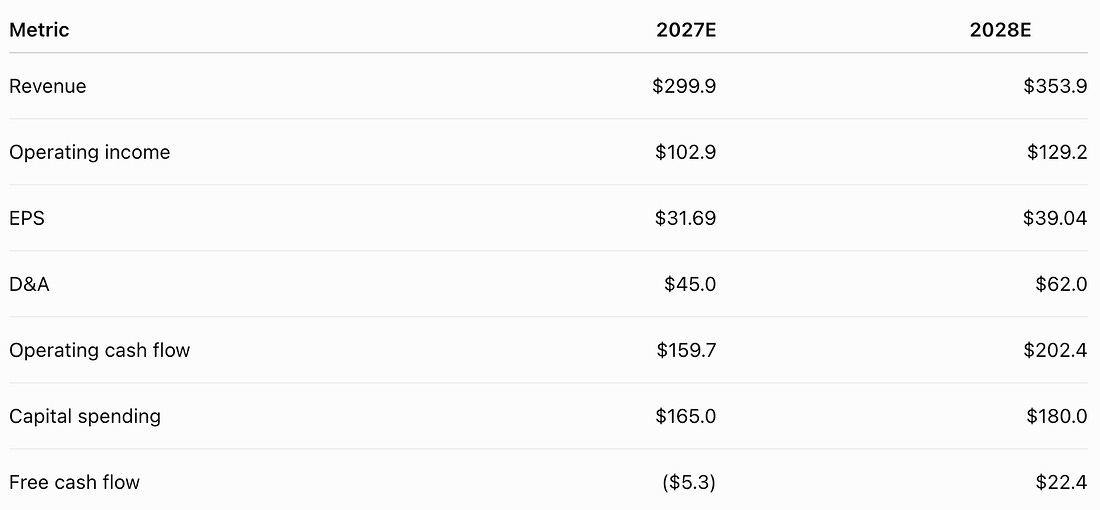
The cash picture is still tight because I have Meta spending about $180 billion in 2028. The business can generate more than $200 billion of operating cash and still have most of it absorbed by the build.
Using roughly 23–27 times my 2028 earnings, I get a 12-month range of about $900 to $1,050 per share, with roughly $975 as the midpoint I use in my base case. From today’s price of ~$751, that midpoint is about 30% upside. When I think about the price I want to build around, I need to consider whether that is enough upside for the risk.
I will share more on my thoughts on that later.
If you liked this report so far and want to read through the rest of the hyperscalers, see how much weight I want to give to each, and hear my personal strategy for building these positions, please become a paid subscriber!
Microsoft
Microsoft is where I want the largest position in this sleeve because AI can make an already dominant enterprise relationship much more valuable.
Microsoft 365 sits inside the daily workflow of huge numbers of companies, Azure runs an increasing share of their infrastructure, GitHub is embedded in software development, and Entra controls identity across many of those environments.
An enterprise agent becomes far more valuable once it can reach internal data and change something on the user’s behalf. That is also where the problem gets harder because the business needs to know who authorized the action, what the agent can touch and which information it is allowed to use. Microsoft already sits inside a lot of that control layer.
Windows 365 for Agents makes the opportunity quite clear. Microsoft now sells a managed Cloud PC where an agent can open applications and perform computer-based work, with on-demand pricing of $0.40 per virtual-machine hour in the U.S. The agent itself can carry additional usage. That means the customer relationship can expand even if headcount stays relatively flat. One employee may eventually supervise far more work, while Microsoft gets paid for some of the machine activity underneath the existing seat.
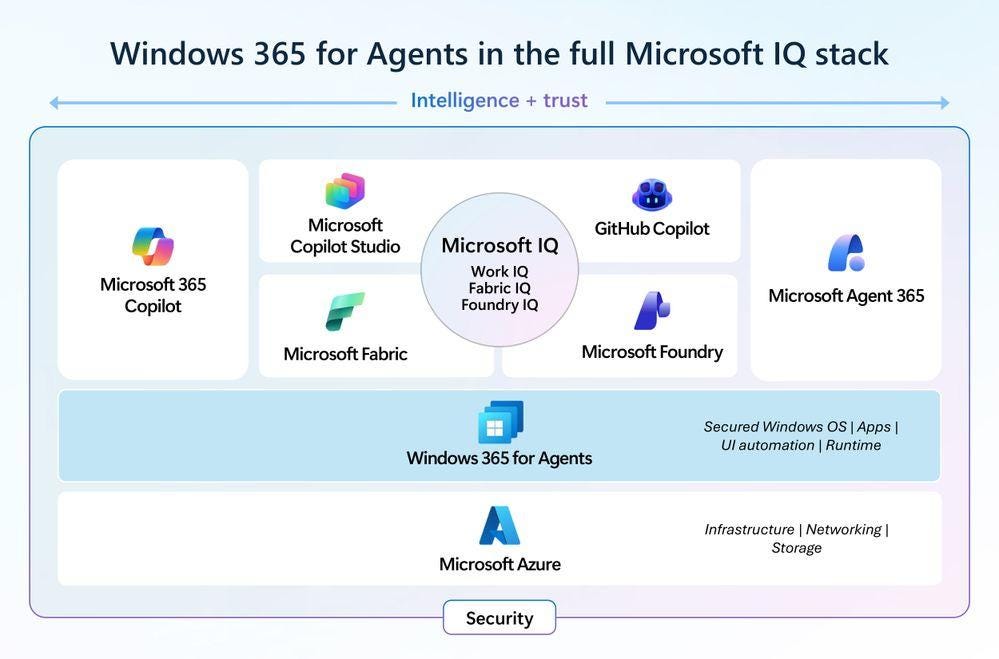
Autopilot pushes the same idea further by giving a persistent agent its own identity, memory and workspace inside the tenant. The broader rollout is still early so the important directional shift is that Microsoft is beginning to sell the environment where delegated work happens.
The same customer can buy software and machine work
Let’s check out in what ways the pricing model is already adapting to these changes. Everyday Copilot can stay inside a subscription, while heavier workflows use Copilot Credits and other consumption charges. I think that is important because the old SaaS relationship was tied closely to the number of human users. Agents create a second way for Microsoft to grow the customer account when more work happens around each employee.
Now when we think about potential problems, permissions are obvious but that’s just one piece. An agent can be allowed to read a database and still misunderstand what the business means. A simple request for revenue can depend on the reporting period and the way the finance team defines returns. Foundry IQ is Microsoft’s attempt to give agents that business context, and its knowledge layer can also be reached by compatible outside clients through MCP.
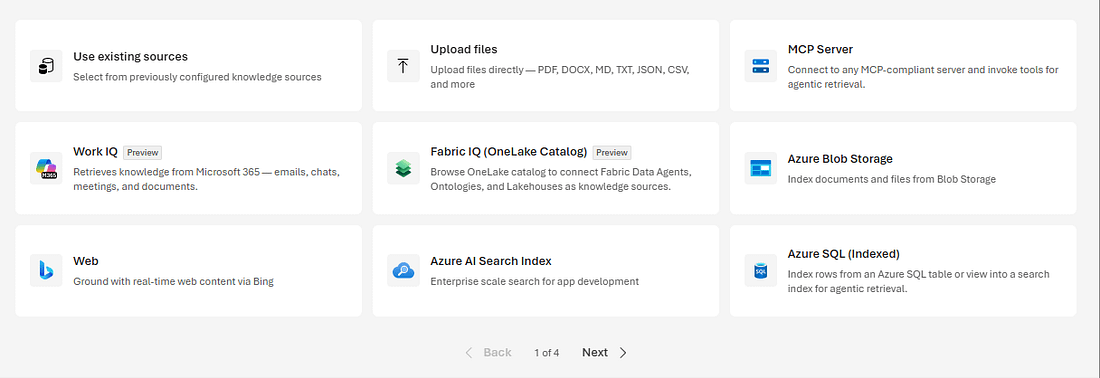
This is one of the reasons I like Microsoft’s position even if the winning model changes. A customer could prefer Claude for one task or an OpenAI model for another and still pay Microsoft for the information, permissions and environment around the work. Microsoft said more than 17,000 customers were already using both Foundry and Fabric on the July call, up 60% year over year.
Dynamics gives Microsoft another piece of the transaction layer. An agent can work against customer records using the application’s own business rules and permissions. That overlaps with the Oracle thesis later in this report. The real advantage belongs to whichever system already contains the trusted workflow for that customer.'
GitHub
Agent HQ allows Claude and Codex to work inside the GitHub environment, which means Microsoft can still own parts of the development workflow even when another provider’s model writes the change.
There is already a commercial path around verification. Copilot code reviews consume AI Credits, while private-repository reviews also use GitHub Actions minutes. As AI makes it cheaper to produce more code, companies may spend more time checking what is safe to merge and release. GitHub has a chance to monetize that verification layer.

I think that is a stronger moat than betting everything on Microsoft having the best coding model. Models can change quickly. The testing routines and release process around accepted production code can stay embedded much longer.
How much of the new profit does Microsoft keep?
The demand side already looks very strong. Azure grew 43% in the June quarter, Microsoft 365 Copilot passed 30 million paid seats, and commercial RPO reached $678 billion. Management also said RPO excluding OpenAI grew 25%. I take a lot of comfort from that because the growth is coming from a much broader enterprise base than a single frontier lab.
Profit per enterprise customer is the number I care about a lot. If useful delegated work expands and the customer ends up spending materially more across Azure, Microsoft 365, GitHub and the agent layer, the thesis gets stronger. If the same customer simply moves budget between overlapping products, the opportunity is smaller than it looks.
The serving cost is part of the same question. Microsoft can use cheaper models for routine work, keep frontier reasoning for harder requests and use Maia to lower infrastructure cost on workloads where it performs well. The economics can improve quickly if the right model handles the right task.
My Microsoft model
When I run Microsoft out to 2028, I get to roughly $517 billion of revenue, around $242 billion of operating income and about $26 of EPS. The operating margin stays close to where Microsoft sits today even as the infrastructure base gets much larger. That is a demanding assumption, but I think the software attached to the compute gives Microsoft a real chance to pull it off.
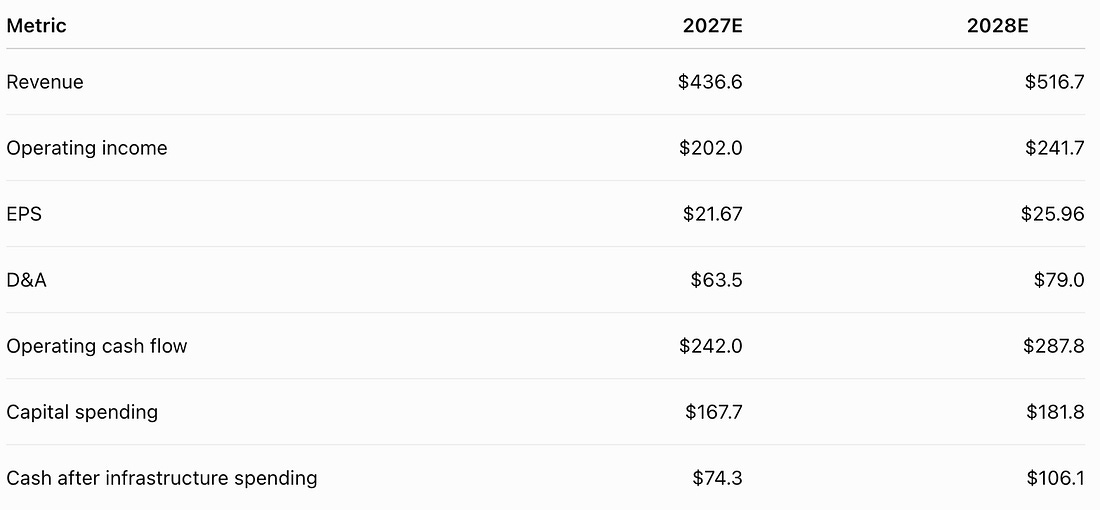
When we look at the capital burden, Microsoft generated $182.9 billion of operating cash flow in fiscal 2026 while property-and-equipment purchases jumped to $115.9 billion. A huge amount of the recent spending went into CPUs and GPUs, so the income statement will keep absorbing more of that build as the equipment enters service. What I care about is whether the new software and cloud profit outrun the cost of the infrastructure supporting it.
Using roughly 28–30 times my 2028 earnings, I get a 12-month range of about $725 to $780 per share, with roughly $750 as the midpoint I use in my base case. From the ~$516 price today, that midpoint is about 45% upside.
Alphabet
I barely use Google for research anymore. This is how I started down the Google investment research rabbit hole.
A few years ago, almost every question I had started in Search. Now I usually open ChatGPT, explain what I am trying to figure out and stay in the conversation until I have what I need. That makes the risk to Alphabet feel very real because the behavior change is already happening in my own life.
But Search is still growing strongly. Q2 Search & other revenue rose 17%, while management said AI Mode had passed one billion monthly users and was increasing overall query activity. I like seeing that strength, but the harder test comes as assistants move from answering a question to actually completing the task. Current Search growth tells me the franchise is holding up during the transition. The open question is who owns commercial intent once the agent can finish the purchase or booking.
What I found is that Google’s answer is to make Search more agentic while turning Gemini into something much broader than a search box. AI Mode can pull in connected services, and Gemini Spark was introduced as a persistent agent that can keep working in the background with approval around sensitive actions. I think the investment eventually comes down to whether Google can make the new behavior happen inside its own products before another assistant becomes the habitual starting point.
Google has a head start on personal context
Years of Gmail, Search, YouTube, Maps and Calendar usage can give Gemini useful context the user would otherwise have to explain. If I ask for help planning a trip, a connected assistant could know some of my previous hotel choices and see when I am free. That makes the first answer better with less work from me.
Personal Intelligence is the product expression of that idea. Users can connect services such as Gmail, Photos and YouTube so Gemini can pull in relevant context. I still think this is an advantage, but I view it as a starting-position advantage rather than permanent lock-in. Memories can be exported, and competing assistants can access Google services when the user authorizes them.
That pushes the moat toward fresh context and reliable action. The assistant that already understands my current situation and has earned permission to do something for me can be much harder to replace than a static file of old preferences. Google has years of history to work with.
The commercial moment is where Search economics get tested
The most valuable request is often the one where I am actually trying to buy something. Asking for a family hotel in Maui within a certain budget reveals far more than a short keyword search. If the agent can understand the request, compare live options and carry the task through checkout, Google can redesign the commercial experience instead of trying to preserve the old results page forever.
The Shopping Graph and Universal Cart are pieces of that system, while the Universal Commerce Protocol (UCP) gives agents a common way to interact with merchant systems. Retailers remain the merchant of record, which gives them a reason to participate because they keep the customer relationship and control the sale.
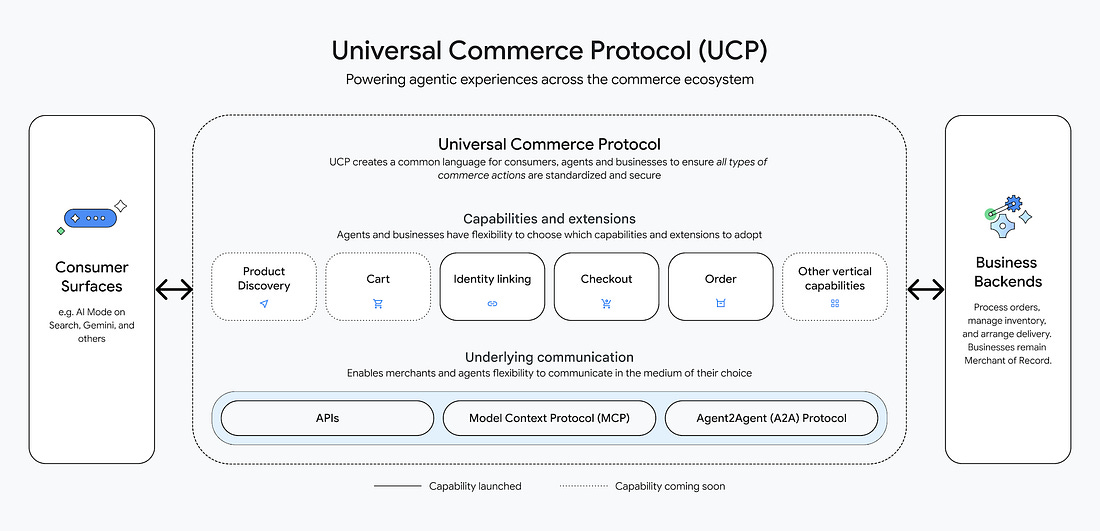
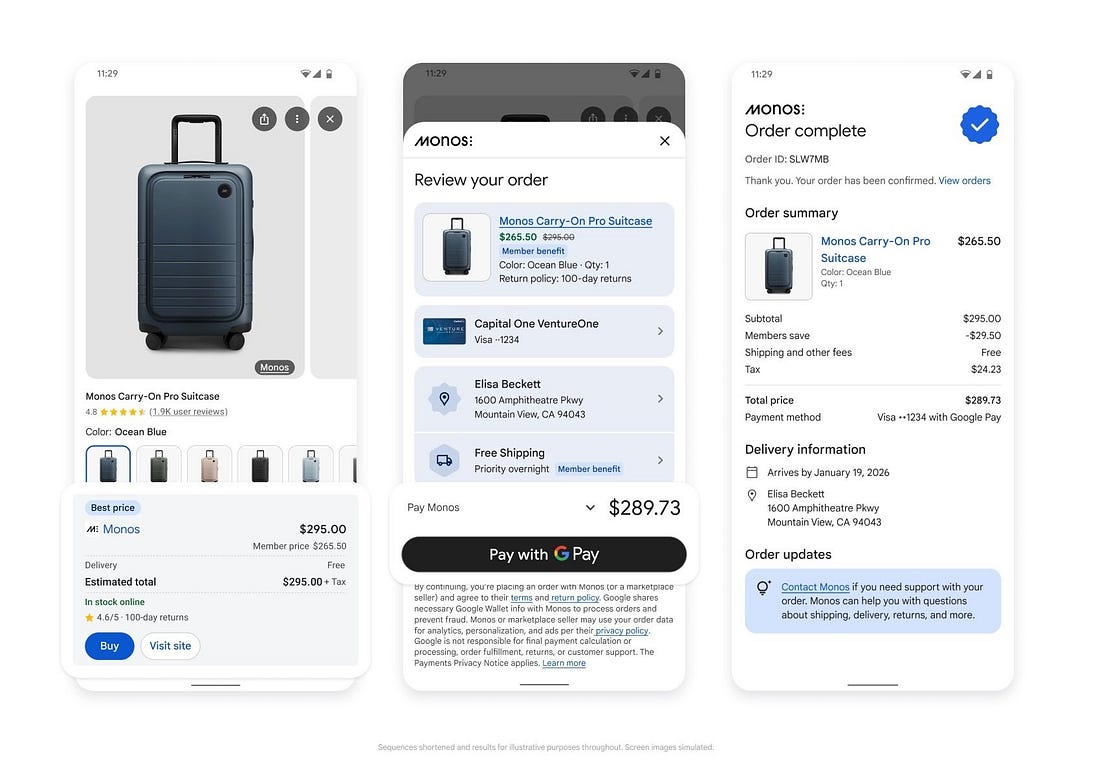
Open merchant access cuts both ways because it makes Google’s agent more useful because the product data and checkout path are better, but the same infrastructure can help another assistant shop the same merchants. I think Google wins here by owning the best consumer experience and monetizing the commercial moment around it, rather than assuming an open protocol becomes a toll road.
Google is already experimenting with Direct Offers and other advertising formats inside AI shopping. That is the part I care about financially. A conversational recommendation can be worth more than a keyword ad if it leads to a better purchase, but Google still has to prove the merchant gets enough incremental value to keep paying at attractive rates.
YouTube can add another layer because it contains real reviews and demonstrations that structured product data misses. I can see the combination becoming very useful for an agent trying to help somebody decide. The recommendation still has to feel trustworthy, especially once sponsored content enters the answer.
Cloud
Google also has a large business underneath the consumer interface of course. Better agent memory and routing can reduce repeated model calls, which means the amount of compute required per task can fall even as AI becomes more useful. That makes the Cloud opportunity more nuanced. I care about total useful work, how much infrastructure each task requires and how much Google gets paid around the workload.

The TPU stack is a real advantage because Google has been designing accelerators around its own workloads for years. That experience can lower the cost of serving Search and Gemini internally, while the same technology can be sold through Cloud or delivered as systems to outside customers.

Q2 Google Cloud revenue reached $24.8 billion, up 82%, with $8.8 billion of operating income. Backlog hit $514 billion. Cloud is now large enough that it can meaningfully change Alphabet’s earnings mix, which is important because I want more than one engine carrying the thesis.
Anthropic gives us a concrete example of Google earning underneath a rival interface. Its April agreement covers Google Cloud services and Google-built TPUs supplied through Broadcom, with more capacity expected in 2027. If Claude wins more usage, Google can still participate. I like that hedge.
Google has also started recognizing revenue from TPU systems delivered to customers, with management expecting most of the existing agreement revenue in 2027. That gives me another visible path from today’s build into future revenue.
My Alphabet model
When I run Alphabet out to 2028, I get to about $691 billion of revenue and roughly $15.60 of earnings per share. Search and the broader Services business still carry most of the company, while Cloud becomes much larger and more profitable.

The spending stays enormous. Alphabet is guiding to $195 billion to $205 billion of capex in 2026 and expects another significant step up in 2027. I am still assuming the business can produce strong earnings while absorbing that infrastructure build, which is why Search monetization and Cloud margins both have to hold up.
Using roughly 28–32 times my 2028 earnings, I get a 12-month range of about $435 to $500 per share, with roughly $470 as the midpoint I use in my base case. From the ~$343 price, that midpoint is about 36% upside.
Amazon
I buy things from Amazon constantly, yet I almost never think to use Amazon’s AI agent. That is where I start with the stock because the transaction relationship is incredibly strong while the decision about what I should buy can happen somewhere else. If I ask ChatGPT or Muse to choose a product and compare retailers, that assistant can shape the shortlist before Amazon ever sees the order. Amazon may still get the sale, but another company has captured part of the commercial intent that supports Amazon’s advertising and marketplace economics.
Amazon has folded Rufus into Alexa for Shopping and given it more memory, research tools and purchasing capabilities. The product can help with price monitoring and some automated purchases. I still separate using a feature inside Amazon from deliberately choosing Amazon’s assistant as the place I begin a shopping task. That habit is what I would want to see develop.

Amazon wants to keep control of the shopping decision
The decision to block Muse from purchasing on Amazon made the strategic tension obvious. Amazon has valid reasons to control account access and responsibility for a bad order, but there is also a huge economic reason. The outside agent can choose which products make the shortlist and which retailer gets the sale.
Amazon reported $19.8 billion of advertising revenue in Q2, up 26%. That makes the interface valuable well beyond the merchandise margin. The interesting part is that Amazon’s own Buy for Me product can go outside Amazon and complete eligible purchases on other merchant sites. Shop Direct can also bring outside inventory into Amazon’s experience. Amazon wants its agent to shop the broader internet while maintaining much tighter control over other agents shopping Amazon.
I doubt the final answer is a permanent wall. If outside agents become a major source of demand, Amazon has a reason to create controlled access with authentication and clear rules around payment, returns and data. That would let Amazon keep part of the transaction even when somebody else owns the starting point.
Commerce infrastructure gives Amazon a second route
Multichannel Fulfillment already lets merchants use Amazon’s logistics network for orders that begin elsewhere. The newer Prime delivery expansion takes that further by allowing eligible merchants to offer the Prime delivery benefit on their own sites while keeping their existing payment systems. So even if another agent sends the customer somewhere outside Amazon.com, Amazon can still store the inventory and deliver the box.
I like that hedge, while the economics still need to be kept in perspective. A fulfillment fee can be worth much less than the combination of marketplace commission and advertising profit Amazon earns when it owns the whole journey. I wonder whether outside volume improves network utilization enough to replace a meaningful share of any economics lost upstream.
Seller Central is expanding into the same territory by connecting merchants across Shopify, eBay, TikTok and Walmart. Amazon can become part of the merchant’s operating workflow even when the sale happens somewhere else. That is strategically useful because it keeps the relationship alive across a more fragmented commerce environment.
Amazon Business adds another angle that I think I underappreciated at first. It already represents about $60 billion of annualized gross sales across more than 11 million organizations. Enterprise procurement is a natural place for agents because many purchases are repetitive and constrained by rules the company already knows. An agent can operate inside Microsoft or Oracle and still send the physical purchase through Amazon.
That starts to make Amazon look more like commerce infrastructure. The agent deciding what to buy, the enterprise system approving it and the network fulfilling it can all belong to different companies. Amazon only needs to keep enough of the profitable pieces.
Robotics can move the retail margin
You guys know I love me some robotics. The model changed how I think about Amazon once I saw the margin sensitivity. The commerce business is so large that a small improvement in margin can move earnings more than another point of AWS margin. In my 2028 model, one extra point of retail and services margin adds about $0.52 of EPS, while one point at AWS adds roughly $0.19.
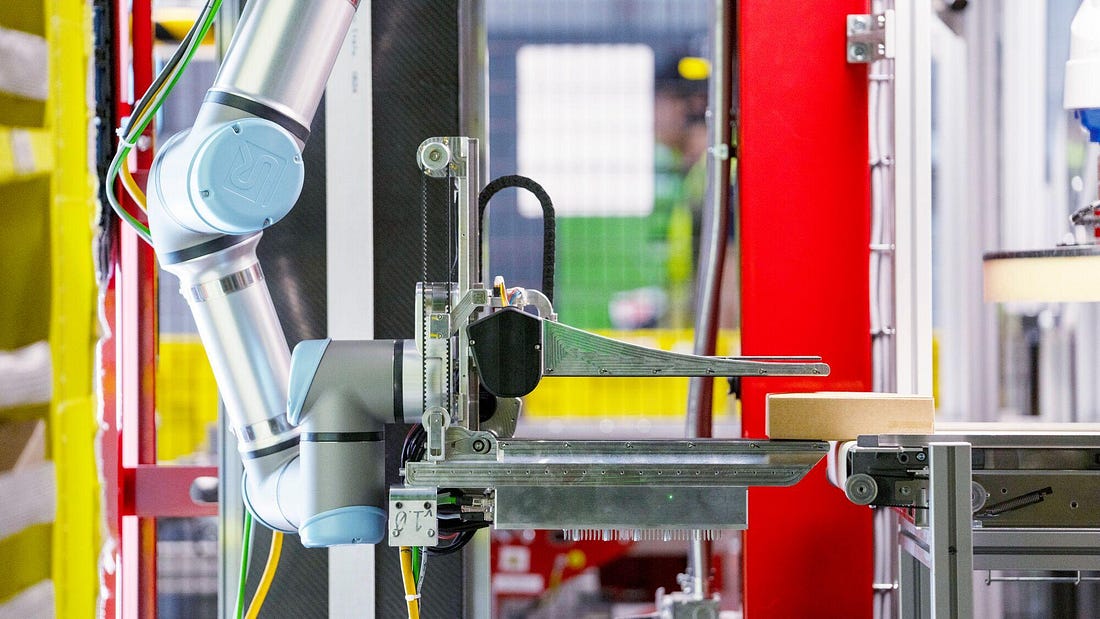
Amazon already has more than one million robots operating across its network.
DeepFleet is designed to coordinate the mobile fleet, and Amazon says it can reduce robot travel time by around 10%.

Vulcan is another example because it uses tactile feedback for picking and stowing, exactly the kind of repetitive warehouse work where physical AI can create a measurable operating benefit. I care much more about what these systems do to cost per order than about whether Amazon ever sells robots externally.
A better shopping agent could help the same margin from the other side by reducing poor product matches and potentially lowering returns. I give that zero separate credit in the model today, but it shows why the consumer AI and the robotics stack can eventually improve the economics of the same transaction.
AWS
AWS gives Amazon a separate path through all of this. Q2 revenue reached $42.2 billion, up 37%, with $16.6 billion of operating income. Management reported about $496 billion of backlog and continued capacity constraints.
AgentCore makes the infrastructure opportunity more concrete because it gives agents a persistent runtime with storage and memory, allowing work to continue over longer periods. Customers can use different models while AWS supplies the environment where the task actually runs. That can create stickier infrastructure even when the model endpoint changes.
Trainium gives AWS another lever underneath that service. Jassy has said most Bedrock inference runs on Trainium, which means customers can benefit from Amazon’s silicon choice without rebuilding every application around a new chip. The external commitments from Anthropic and OpenAI add stronger validation on top of that. The OpenAI agreement is huge with roughly 2 GW of Trainium capacity, another $100 billion of cloud commitments over eight years and a planned $50 billion Amazon investment.
The capital cycle
Amazon generated $161.4 billion of trailing operating cash flow while free cash flow fell to roughly negative $7.6 billion as the infrastructure build accelerated. They expect about $220 billion of capital spending in 2026. The business is throwing off an enormous amount of cash before investment and then recycling almost all of it back into capacity.
That creates one of the most interesting cash-flow setups in the group. In my model I still have Amazon spending ~$270 billion in 2028. If the business reaches a point where annual spending can flatten while AWS and retail profit keep growing, cash flow can inflect very quickly.
My Amazon model
By 2028 I have AWS at about $285 billion of revenue and the much larger commerce and services business at roughly $761 billion. That gets total revenue to around $1.05 trillion and earnings to about $11.17 per share.
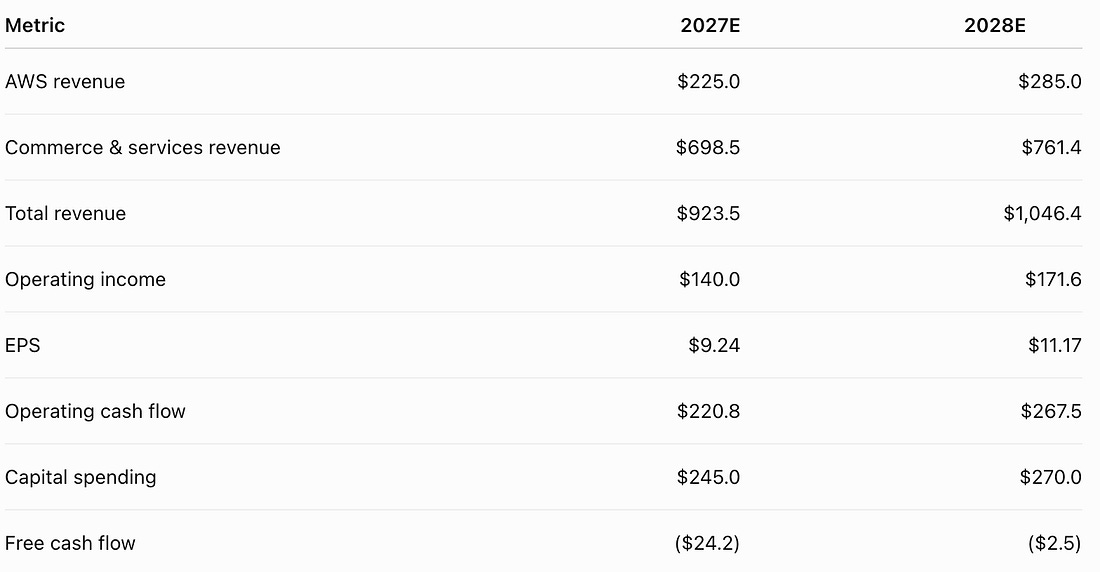
AWS remains the higher-margin engine, but retail margin improvement has more EPS leverage than I expected before doing the work. That makes robotics, fulfillment density, advertising and the shopping agent financially relevant in a way I was underestimating.
I value AWS and the commerce business separately because the economics are very different. Using roughly $107 billion of AWS operating income and about $65 billion from the rest of Amazon, I get a 12-month range around $320 to $330 per share depending on the balance-sheet adjustment. From the ~$249 price, that is roughly 28% to 32% upside.
Oracle
Oracle is the company where the growth makes me want to size up and the financing makes me immediately pull back. OCI infrastructure revenue grew 121% to $7.4 billion in the August quarter. Oracle also reported another 850 megawatts of delivered capacity and more than 300,000 GPUs, while RPO reached $664 billion.
The surprising part is that OCI may still be the less durable half of the thesis. Oracle already owns databases and applications where businesses keep the information they trust and record the transactions that actually happened. As agents move from answering questions to doing work, that position can become more valuable.
Oracle can own the action even when somebody else owns the model
Think about an agent buying equipment for an office. The model can help decide what to buy, but the enterprise system still needs to know which suppliers are approved and whether the employee has authority to place the order. Once the purchase is approved, something has to record the commitment inside the business.
This is where Fusion Claw comes in. Oracle’s design lets a frontier model handle the judgment part of the task, then passes the repeatable enterprise work into deterministic software with limits around what the agent is allowed to do. An outcome receipt records what happened. I like this because it uses the model where reasoning helps and keeps the sensitive transaction inside software the company already trusts. That can also lower the amount of expensive model work required for a task. More useful automation can actually require fewer model calls for some steps. Oracle can benefit if customers automate more work inside Fusion even as the cost of reasoning comes down.
The moat is strongest inside the installed workflow, where the customer already has years of rules and data. Microsoft can do similar things inside Dynamics, and ServiceNow is opening its own workflow layer to outside agents. Oracle’s advantage is strongest where the customer already has years of data, rules and processes inside Oracle applications.
Multicloud makes the database more durable
Oracle has also made a very smart strategic decision by putting its database inside AWS, Azure and Google Cloud environments. The customer no longer has to choose between keeping Oracle and standardizing on another cloud. An agent can run on AWS and still use Oracle data through an Oracle-managed service.
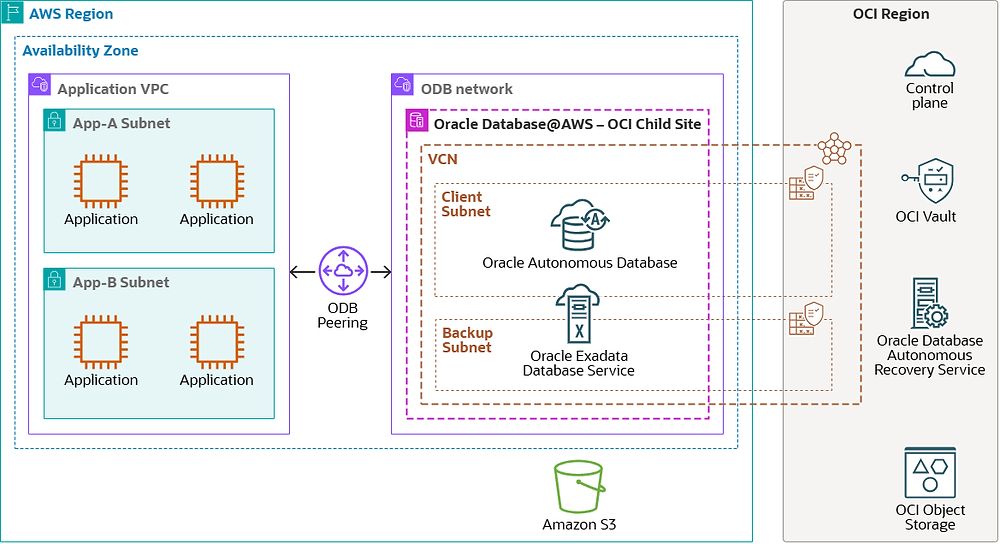
This is a great position to be in in an agentic world. Oracle can get paid even when somebody else owns the assistant and the surrounding cloud. Multicloud database revenue grew 404% in fiscal Q4, which is impressive, although the absolute base is still too opaque for me to build a huge valuation argument around the percentage alone.
The more important point is that the database relationship can survive model and cloud fragmentation. If enterprises use several assistants across several clouds, Oracle can still sit underneath them where the trusted records live. That gives them another way to win besides trying to beat AWS, Azure and Google at the broad hyperscaler game.
OCI is the part that makes the stock dangerous
Oracle’s infrastructure business is scaling at a pace that would normally make me much more aggressive. The problem is what has to be built around all of that demand. OCI relies heavily on NVIDIA and AMD rather than a proprietary accelerator stack, and Oracle has fewer internal workloads than the other hyperscalers to absorb spare capacity if industry supply ever runs ahead of demand.
The $664 billion backlog is also long duration. Only about 13% was expected to turn into revenue during the next twelve months, with a large portion stretching several years further out. OpenAI is a major concentration inside the computing backlog. That can become an incredible contract if OpenAI keeps scaling, but it also means a lot of Oracle’s future infrastructure economics are tied to a small group of very large customers.
The risk can show up even while AI usage keeps growing. Models can get more efficient while the industry keeps adding capacity, which can push pricing down. Oracle needs outside customers to keep the new facilities busy at returns that justify the funding burden.
Customer-funded hardware is the thing that could change my mind
The most bullish development for me is the way some of the new contracts are being funded. At fiscal 2026 year-end, Oracle said the prepaid and customer-supplied-hardware portions of large AI contracts totaled $75 billion. Those are two different structures, but both can reduce the amount of capital Oracle has to put up on day one.
The customer-supplied hardware piece is especially interesting because if the customer buys the expensive accelerators while Oracle provides the facility, network and service around them, Oracle can grow revenue without carrying the entire GPU purchase itself.
Prepayments help too. Q1 operating cash flow included $11.4 billion of customer prepayments with a financing component.
The long commitments keep the position small. Oracle has disclosed $288 billion of additional data-center lease commitments that generally last 15 to 19 years, and it already issued nearly $20 billion of common equity in Q1. A lease can last through several generations of GPUs. I want to know who pays for the next hardware cycle and what happens if a customer contract ends before the building obligation does.
My Oracle model
When I run Oracle out to 2028, I get to about $142 billion of revenue and roughly $9.67 of earnings per share. If I stopped there, I would own a lot more Oracle.

The cash requirement is what changes the answer. My model still has Oracle burning roughly $16 billion of conventional free cash flow in 2028 and needing around $57 billion of additional net borrowing across 2027 and 2028. Debt gets close to $182 billion before I even think about the future lease commitments.
Using roughly 16–20 times my 2028 earnings, I get a 12-month range of about $155 to $195 per share, with roughly $175 as the midpoint I use in my base case. From the ~$137 price, that midpoint is about 28% upside. The upside can become much larger if customer-funded equipment reduces the capital burden and the database business becomes a key execution layer for enterprise agents. The downside is also much harsher than the other names if the contracts require more Oracle-funded capital than expected.
I still want exposure because the upside is real, but the risk is much higher than Microsoft or Google. Oracle has a real chance to surprise people on the upside. I just need the financing to become a lot cleaner before I want much more of it. I am being very conservative here and I will happily update my model and my weighting as I gain more confidence in Oracle. The weighting here does not represent the fact that I don’t think they have significant upside potential. It’s just in-line with where I see my own risk tolerance for this sleeve.
How I want to own these businesses
After working through all five names, this is where I land inside the hyperscaler sleeve:
Microsoft 30%
Alphabet 25%
Meta 20%
Amazon 20%
Oracle 5%.
The weights are really an expression of how much confidence I have in the earnings path.
Microsoft gets the largest position because I think it has the clearest way to make more money from the same enterprise customer as agents do more work.
Alphabet gives me Search, Cloud and custom silicon, with the biggest behavioral threat sitting right in front of me every time I choose ChatGPT over Google.
Meta and Amazon both have strong existing profit pools that AI can improve while they build new agent businesses around them.
Oracle gives me enough exposure to the upside without letting the most funding-sensitive story dominate the sleeve.
I expect these weights to move as the evidence changes.
And I will happily update along the way!

Buying Strategy
This should absolutely be tailored to your own strategy please. This is just how I am doing it.
I have been building these positions over the past few weeks.
I am very slowly building them. A couple % of my target allocation every few days or so.
I personally am not doing much deep technical analysis here. I am simply going based off of prior support levels and how much upside I want for each company. If I was doing short term swing trading, this is not how I would approach this. I am just being a long term investor with a multi year time frame that I gradually want to build exposure.
That being said, some levels I would really like to be averaged around are as follows:
MSFT around $470-$490
META around $660-$680
ORCL around $130
GOOG around $330
AMZN around $230-$240
But again, not swing trading these and not trying to perfectly time the bottom. Not being aggressive with adds. Will build these over the coming weeks/months.
Financial Disclaimer
This report is provided for informational and educational purposes only and should not be considered financial, investment, tax, legal, or accounting advice. Nothing in this report is a recommendation or solicitation to buy, sell, or hold any security, nor should any discussion of portfolio weights, price targets, valuation ranges, entry levels, expected returns, or investment strategies be interpreted as personalized investment advice.
I may hold positions in some or all of the securities discussed and may buy or sell those positions at any time without notice. My views can change as new information becomes available, company fundamentals evolve, market conditions change, or valuation changes.
Any financial models, earnings estimates, revenue forecasts, margin assumptions, free cash flow estimates, valuation multiples, price targets, scenario analyses, and portfolio allocations are my own estimates and involve significant uncertainty. They are based on information available at the time of publication and may differ materially from actual future results. Forward-looking statements are inherently uncertain, and actual outcomes may be significantly better or worse than the scenarios discussed.
Company guidance, management commentary, product roadmaps, customer commitments, backlog, remaining performance obligations, capital expenditure plans, and other forward-looking disclosures should not be treated as guarantees. Reported metrics may also use different accounting definitions across companies and may not be directly comparable.
Investing in equities involves the risk of substantial loss, including the possible loss of principal. Technology and AI-related companies can be especially volatile and may be exposed to rapid changes in competition, regulation, capital spending, financing conditions, customer concentration, technological obsolescence, and market expectations.
Any references to historical performance, analyst estimates, consensus expectations, or prior stock-price behavior are not guarantees of future results. Price targets and valuation ranges are estimates rather than predictions and should be viewed as one possible outcome among many.
Readers should conduct their own research and consider their individual financial situation, risk tolerance, investment horizon, tax circumstances, and objectives before making any investment decision. Consider consulting a qualified financial, tax, legal, or other professional adviser where appropriate.
All information is believed to be reliable at the time of publication, but accuracy and completeness cannot be guaranteed. Errors, omissions, and changes in publicly available information may occur.