2026.10.11 | Substack | Memory | The Tragedy of 3D XPoint
原标题:The Tragedy of 3D XPoint (AKA Intel Optane AKA Micron QuantX)
- Irrational Analysis is heavily invested in the semiconductor industry.
- Positions will change over time and are regularly updated.
- Opinions are authors own and do not represent past, present, and/or future employers.
- All content published on this newsletter is based on public information and independent research conducted since 2011.
- This newsletter is not financial advice and readers should always do their own research before investing in any security.
- Feel free to contact me via email at: irrational\_analysis@proton.me
Given how fucked the memory market (DRAM in particular) is, I want to re-visit a dead-ish technology, 3D XPoint.
This tech is (er… was) branded as Optane by Intel and QuantX by Micron. For the sake of writing consistency, I will use 3D Xpoint (3DXP) but just know all three of these terms effectively refer to the same thing.
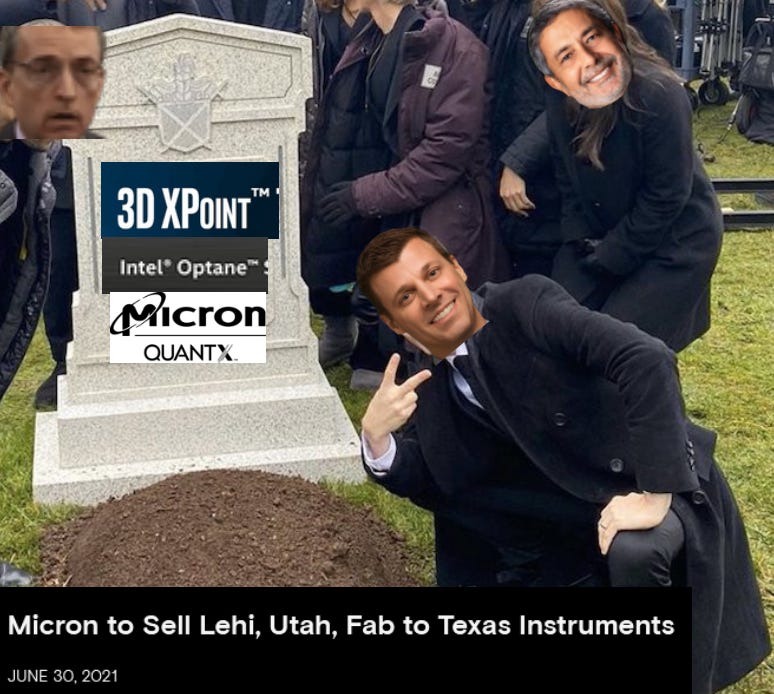
Amusingly, David Zinsner (my favorite semiconductor CFO) was part of Micron when they killed their 3DXP program then moved to Intel who also killed their 3DXP program shortly after. My cherished Zinsner played a direct role in killing 3DXP across both the companies that developed it.
3DXP is a tragic technology, both too early and too late. In writing this shitpost, I hope to convince Micron and Intel (and maybe SpaceX/Terrafab/Elon) to re-visit. We live in a very different world these days and the economics of 3DXP might be very attractive again.
While building my OCP 2026 schedule, I noticed something…

Byte-addressable persistent memory…. phase chance memory (PCM) just like 3DXP?

Yup. The Chinese are picking up where Intel and Micron gave up.
Follow me down the 3DXP/PCM rabbit-hole. If you are getting fucked by DRAM allocation you wana hear about this.
This post was heavily inspired and developed from the following EXCCELENT material by ServeTheHome and Asianometry.

I will ignore all the material science and physics stuff because Jon does a much better job at covering it. Go watch his excellent video.
Contents:
- 3D XPoint vs NAND Flash vs DRAM
- The Tragedy of 3D XPoint
- Death by Interface
- Why can revive the corpse, and should they even bother?
- Please help me with OCP coverage!
1] 3D XPoint vs NAND Flash vs DRAM
3DXP is an odd technology that has performance characteristics between NAND flash and DRAM.
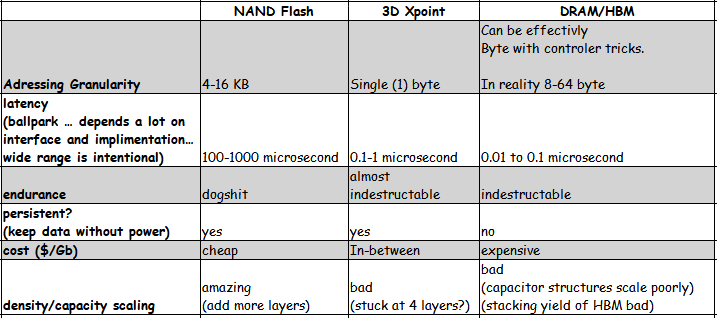
Intel’s old marketing slides tried to push this point but in sometimes misleading ways.

It’s only that much faster if the interface is DRAM-like or the application/workload values consistent low-latency (wants DRAM-like attributes). NVMe/PCIe acts as a horrible bottleneck so if you compare 3DXP SSD vs contemporary NAND SSDs at the time the delta is much lower.
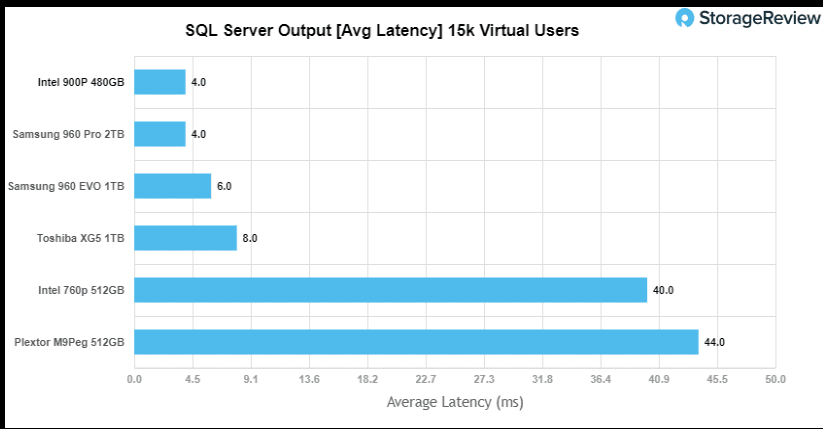
10x better is in fact, smaller than “100’s of times faster.”

https://www.storagereview.com/review/intel-optane-ssd-900p-series-review

Usually 3DXP in the form of Intel’s first-party 900P NVMe SSD gets a 2-5x advantage over contemporary NAND flash NVMe SSD. Sometimes 10X.
Where it really shines and delivers that 100’s of X improvement is random latency.

https://hardwarecanucks.com/storage/the-intel-optane-ssd-900p-review/
Incredibly low and consistent latency. Makes these 3DXP SSD glorious for database workloads and DRAM-like in quality.
3DXP behaves like DRAM in many respects, enabling special use-cases like database workloads or even DRAM replacement or augmentation.
In other words, 3DXP has performance qualities that let it play in DRAM-land natively that NAND flash simply cannot. The HBF effort is so pathetic in comparison to the glory of 3DXP.
But… 3DXP is really expensive, even compared to modern NAND flash prices. Scaling of 3DXP stopped at 4 layers before Intel and Micron both gave up. At the time, NAND flash was at around 48-128 layers depending on how you want to weigh volume shipments. Since then we have 200-300 layer NAND flash today and roadmaps to much high layer counts.
The key takeaway you all need to understand is 3DXP attempting to compete with NAND flash on NAND flash world’s terms is suicidal and in a way a large part of why it failed.
The real opportunity has always been in competing against DRAM in applications/workloads that want DRAM-like attributes (latency, consistency, endurance) and cannot tolerate NAND flash.
3DXP was always a play at cheaper DRAM with way more capacity/density and persistence on the side as a neat bonus.
2] The Tragedy of 3D XPoint
To truly understand why 3DXP failed, you need to understand the full history. Intel was going through their self-immolation phase of epic retardation and that contributed heavily to the downfall of 3DXP. Believe it or not, 10nm logic node legendary fuck up directly contributed. Ice Lake delays and how Intel sold 3DXP in terms of SKU stack obnoxiousness. But getting ahead of myself.
In 2015, Intel and Micron announced 3D XPoint to great fanfare.

They already had an existing joint venture for NAND flash and 3D XPoint joint development fell under that legal entity. Manufacturing of 3DXP was at a jointly owned Lehi, Utah fab.
Let’s look at the Micron-side of the story first. I find that independently tracing the two companies paths more illuminating.
In July 2018, Intel and Micron announced they would split off and develop 3DXP IP independently going forward.

But that Lehi, Utah fab would still be shared. Personally I think Micron wanted to exercise their right to unilaterally buy out Intel’s 49% share of the fab but they did not agree on the price.
Three months later… Micron bought out Intel’s half of that fab.

My boy Zinsner was just itching to sell that turd of a fab and buyback shares. Very sad but also understandable. He was not wrong to do this based on the information he had at the time.
Micron did not release their first 3DXP product until 2019, a 3-4 year delay depending on when you started counting.
The Micron X100 SSD was running on NVMe over PCIe gen3 and all the limitations that come with that interface. Remember, the real value was in a DRAM-like interface with DRAM-like latency. 8 microseconds is unacceptable. This is like using a supersonic fighter jet for commercial air travel between regional airports that are only 100 miles apart.
My sense is they had some inventory and wanted to dump it.
In March 2021, Micron announced their intention to sell the Lehi, Utah fab. One does not simply sell semiconductor fabs on Ebay or Amazon. Surprisingly, it only took them three months to find a buy and sign paperwork.

Texas Instruments would buy the fab for dirt cheap, re-tool it for analog stuff, and go on their merry way.
Intel was left with no supply of 3DXP, but a rather massive stockpile of inventory. Eventually they got some of Fab 11X (New Mexico) for internal 3DXP supply.
But Micron was out. And very glad to be out. Here are some snippets of Zinsner (a hero who helped save Intel in his next job) gleefully explaining how happy he is to get this 3D XPoint shit off his book.
Q1 and Q2 2019 had several mentions of 3D Xpoint.
Q3 2019 no mention
Q4 2019 they finally admit “continuing underutilization impact for foreseeable future”.

Q1 2020 Micron hypes their X100 SSD launch.

Like two sentences later they talk about moving equipment our of Lehi, Utah to right-size the fab producing the shit that goes into that product.

Q2 2020: Micron gets a new wafer supply deal with Intel, likely at more favorable economics for Micron.

“Intel you hold the bag on this shit please.”
Q3 2020: “We are only company in world with NAND, DRAM, and 3D Xpoint.”
Q4 2020: No mention.
Q1 2021: We moved 3D Xpoint turd to a diff business unit. Our numbers for that business unit would have been great if we excluded the turd.

Q2 2021: We out.

Now let’s look at Intel plotline in the 3DXP tragedy. I will not be going over their earnings call transcripts because the brain damage from reading old Intel earnings calls would be quite material. Remember this is from the era where intel went full retard and almost died.

Intel’s perspective can be told as a story of bad products at the wrong place at the wrong time.
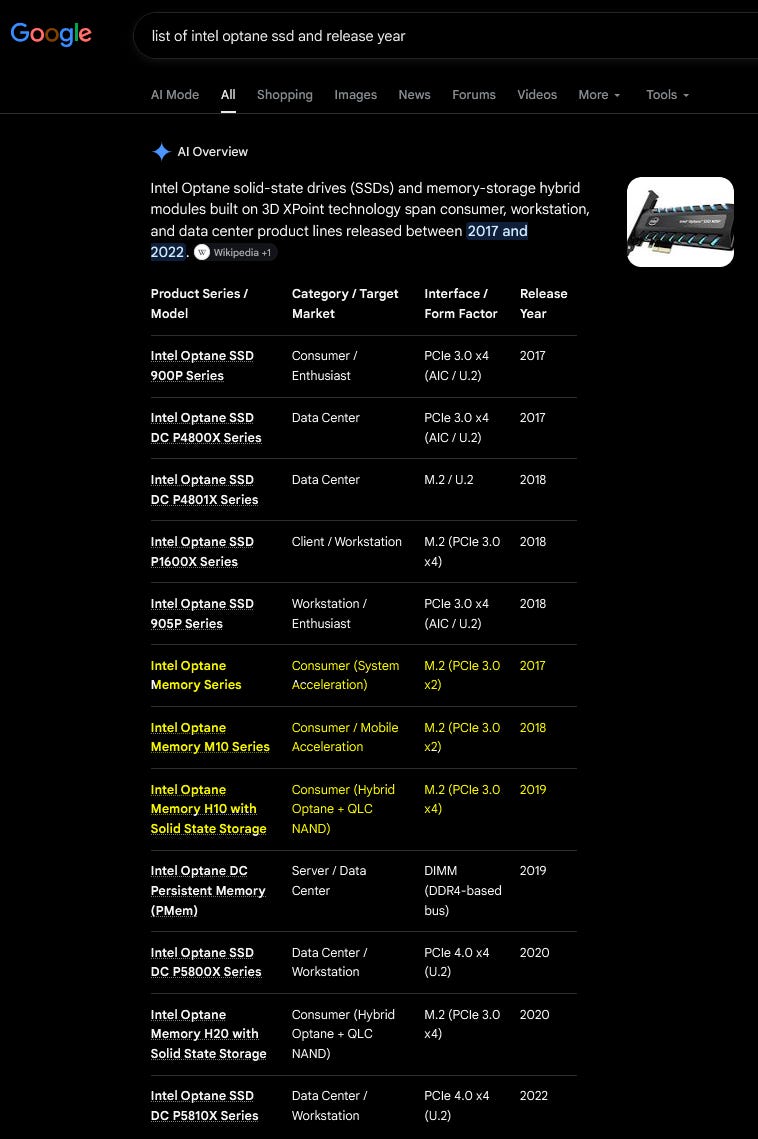
Remember, 3D Xpoint truly shines in DRAM application/workload. NVMe.PCIe chokes much of the potential from this breakthrough technology. So Intel initial releases are fine as PMem (will get to that) was not ready.
But the highlighted products are ultra retarded. The idea was to use a small amount of 3DXP to accelerate a HDD or regular SSD. Like using racing car fuel and aerodynamic spoilers on a plug-in hybrid. Clearly this was Intel using their pseudo-monopoly powers to unload small chunks of 3DXP on laptop OEMs.
Then came the wonderful world of DC persistent memory, 3D XPoint that slots into DRAM slots\*.
- Only certain Intel CPUs and motherboards.
- Have to pay extra money for the Optane-enabled CPU SKU because fuck you.
- MANY TECHNICAL AND IMPLIMENTATION PROBLEMS
ServeTheHome is the goto place for coverage on what happened here. I am basically regurgitating their content with some memes on top please go read/watch their stuff if you want to understand the technical bits clearly.
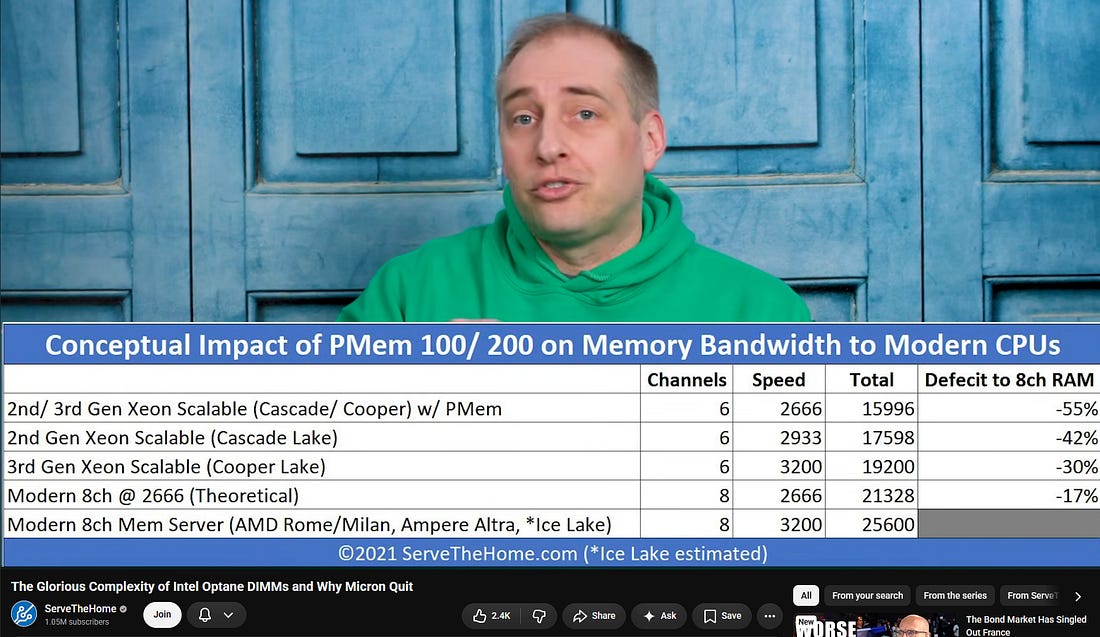
3DXP PMem was delayed by several years which is bad. What is much worse is Intel’s CPU server map (Ice Lake) was delayed even longer due to 10nm legendary fiasco.
Thus if you wanted to use PMem (in any mode), you had to sacrifice significant DRAM bandwidth on the entire CPU. Which makes the question of “why should I buy this when I can just buy more DRAM” much more prominent than it already was or needed to be.
To emphasize this point, Intel is trying to sell a product that competes with DRAM directly on cost/Gb and is shooting themselves in the foot by telling customers “by the way our product is meaningfully slower so make sure to account for that in your cost analysis.”
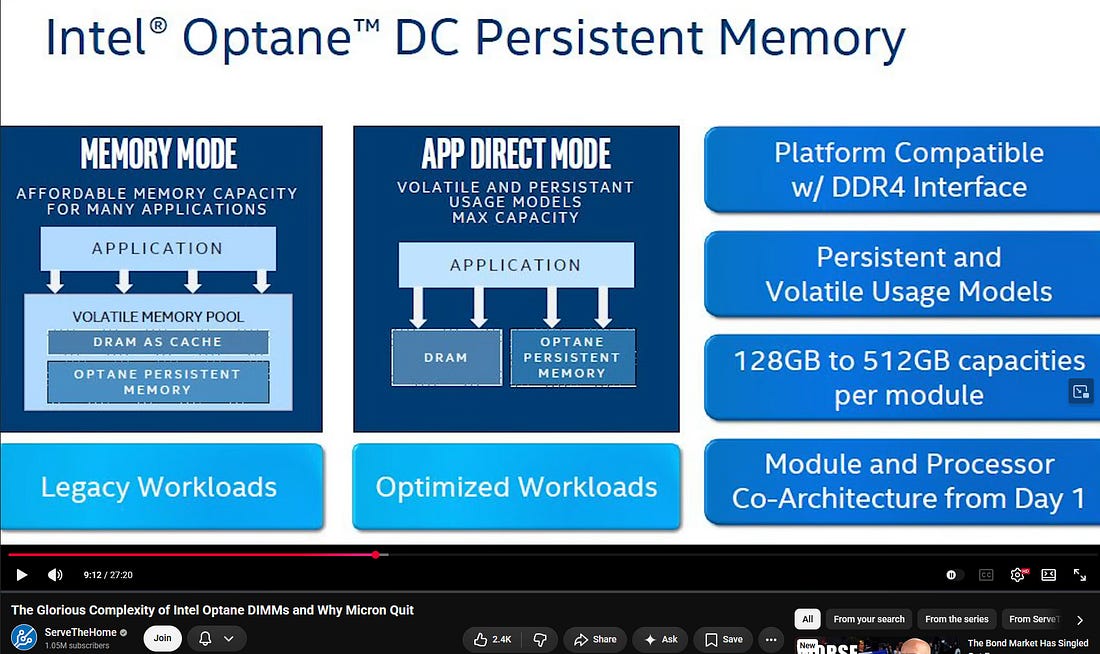
From the software side, there were two modes available.
Memory mode is the lame mode where DRAM sticks act as a cache for the slower 3DXP sticks. Just a straight capacity expansion with not much of the benefits.

App direct mode is where the 3DXP is exposed directly to software and can be fully utilized at full byte-addressable glory with persistence too.
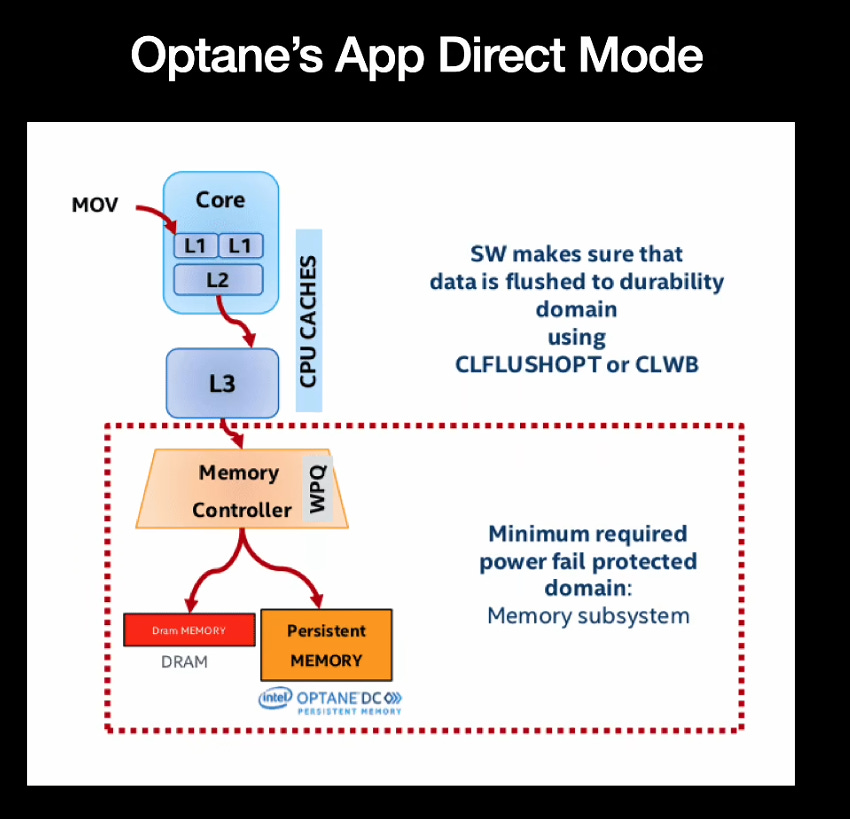
Imagine power cycling an inference server for maintenance or whatever and booting up back with all the KV cache or model weights are still there ready to go. That is what persistence gives you. Back when 3D XPoint was still alive, the big database companies (SAP Hana, Oracle) loved this tech. Instead of waiting an hour to re-load the database into DRAM… its already still there between power cycles.
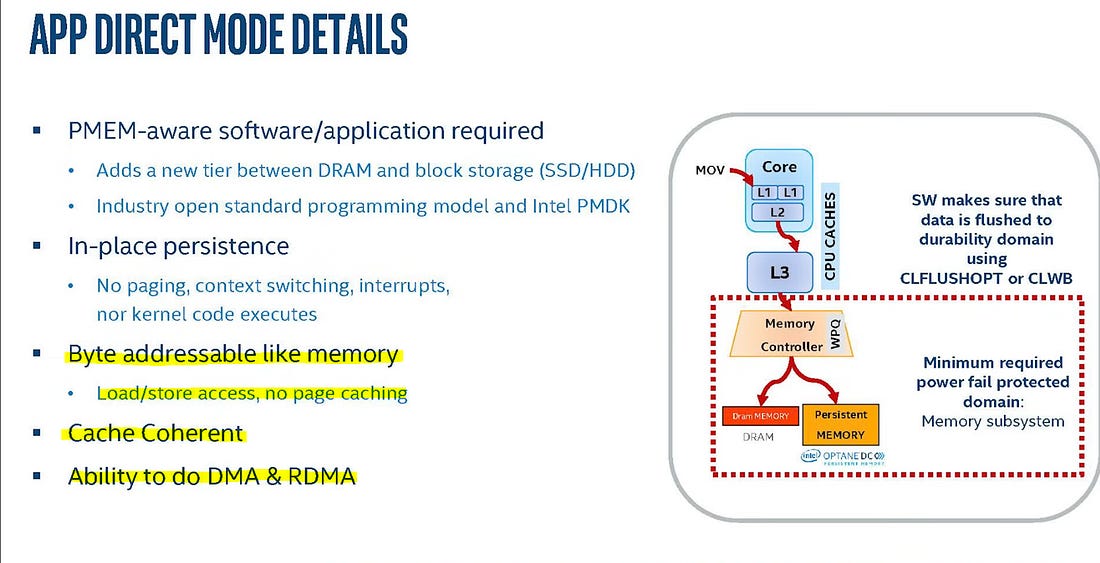
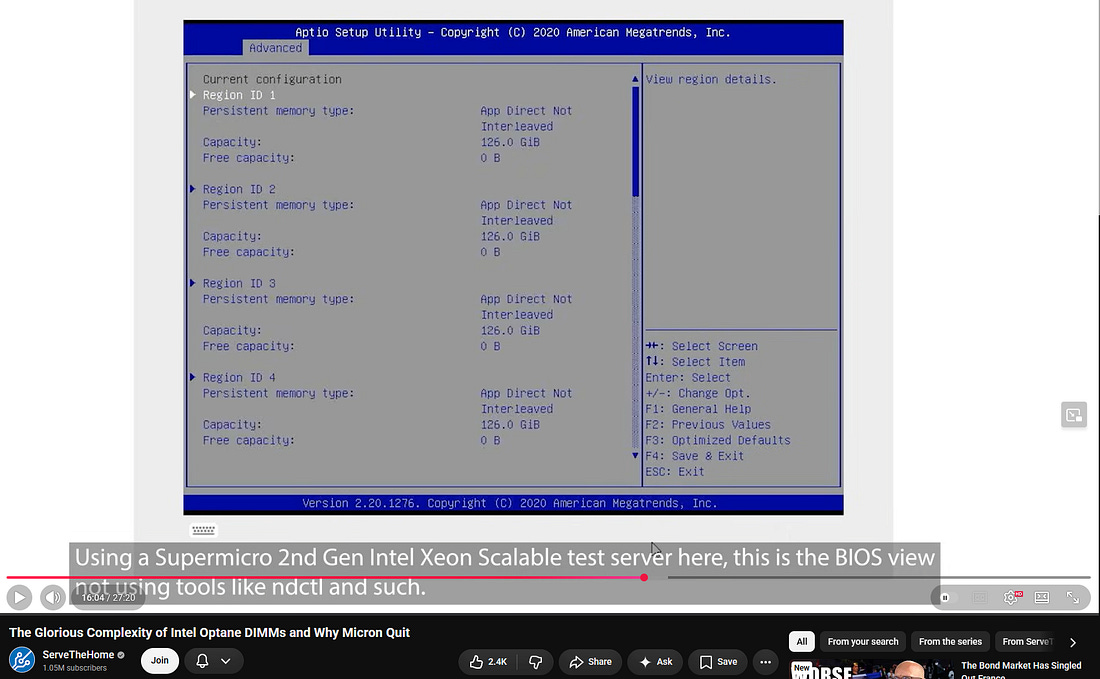
So App direct mode is the way to go for getting real performance benefits, but it requires BIOS-level configuration. Essentially its software RAID style data striping for redundancy.
This is yet another layer of complexity that is unique to 3DXP deployment and it’s not trivial. You have to actually think and make conscious tradeoffs between performance (speed, latency) and data redundancy. With DRAM, you just plug the sticks in after selling your firstborn child and some warrants to the DRAM manufacturer.
3DXP was at the wrong place and the wrong time and eventually even Intel had to kill it. The legendary disaster Q2 2022 report had the execution of 3DXP as a non-GAAP footnote.
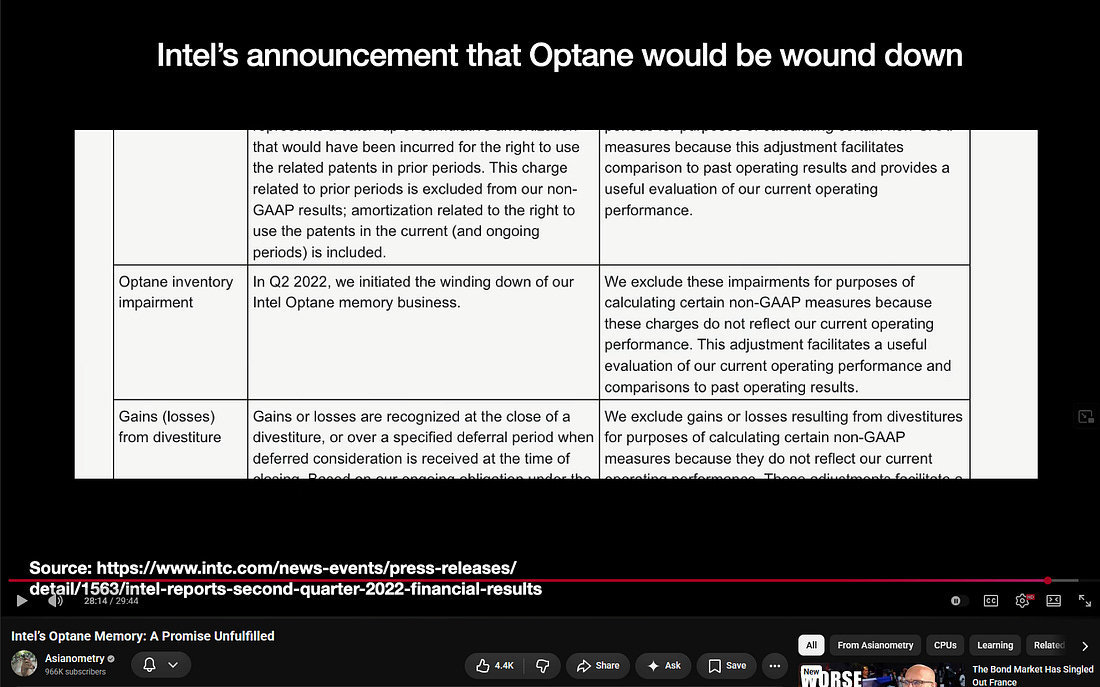
Intel made many self-inflicted mistakes which I could go on and on trashing them over, but in truth their stupidity was maybe 30% of the reason 3DXP failed.
The other 70% was from market conditions. NAND scaled very fast. DRAM pricing went down at the time and squeezed 3DXP from the market it would truly excel at.
Ironically 3DXP technology was both too early and too late.
Too early for the AI revolution where KV cache and model weights would make persistence actually matter outside of niche existing database workloads.
Too late to compete with NAND flash on cost.
Too early to slot into AI accelerators and agentic CPU workloads.
Too late (did not survive long enough) to see NAND flash and DRAM prices go vertical.
3] Death by Interface
3DXP died because of interface limitations. I get so mad when people cite Micron’s press release claiming they abandoned 3DXP in favor of CXL.
CXL is just a protocol built on top of PCIe. Literally nothing prevents you from making a 3DXP device that sits on top of a CXL bus.
In fact, CXL might be the correct technology… for 3DXP/PCM.

Personally I hate that CXL is built on top of PCIe, a mediocre PHY.
Anyway, the vast majority of 3DXP was either deployed in NVMe drives (shit) or in CPUs as Memory mode (also shit). Only the small subset deployed in CPUs as App direct mode saw the true promise.
4] Why can revive the corpse, and should they even bother?
Alibbaba has something in partnership with Demingli. Looking forward to their OCP presentation.
Intel and Micron both have the IP to bring 3DXP/PCM back.
Micron out of self interest is very unlikely do try. DRAM prices are super high and 3DXP directly competes with DRAM in the target applications. Regardless, Micron management is probably so traumatized they will never bother with 3DXP ever again even if the numbers work out. Just print more money expanding regular DRAM and HBM capacity.
Intel is finally back in it’s stride. EMIB-T advanced packaging is going well, despite what the Taiwan degens keep screeching. 18AP is good (they fixed 18A with more time just like I hopefully predicted). There is activity on 14A although still too early IMO. And Product business (which I considered a zero) is going to the moon because of agentic CPU revival. Intel is probably too busy to bother with making big bets on a failed technology where they ate shit on for 7 years in embarrassing fashion. Lip-Bu Tan is a conservative CEO (this is good thing) and won’t back this.
Which leaves one unlikely degen hero who could bring back 3DXP.

What if Terafab/SpaceX licensed 3D Xpoint from Intel? There already is some kind of deal between the two for logic nodes or… just a friendship IOU.

If Terafab/SpaceX can figure out how to scale 3D XPoint beyond 4 layers (the limit Intel and Micron hit back in the day), it could be a very compelling memory technology.
Do I see Terafab figuring out how to make DRAM at scale in a competitive way against the big three (SK, Samsung, Micron)? No not really. There is a rather large experience gap here.
But Terafab and Elon Musk taking a dead half-assed exotic technology and finding some clever innovations Intel and Micron missed…. yea that seems much more realistic.
5] Please help me with OCP coverage!
I have a very busy OCP schedule for dayjob and newsletter coverage. There are several talks I definitely will miss and I would like your (yes you) help with.
There are several instances of two or even three interesting talks at same time. Also I will be at Semtech analyst day most of Thursday. It is physically impossible for me to attend every talk that is interesting.
Monday October 12:





Tuesday October 13:






Wednesday October 14:








Thursday October 14:


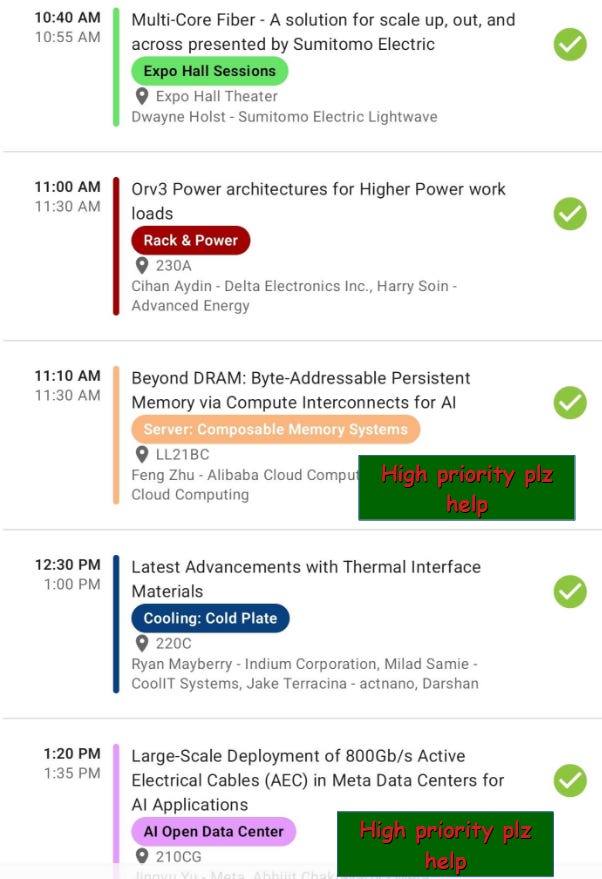

If you have some spare time in your schedule or are going to any of the talks above, please help and take pictures or notes or anything really.
If you work at one of the companies who has one of these talks and could maybe get me the slides or a recording or something in the week AFTER OCP, please help.
Email me:
irrational\_analysis@proton.me
The above list is just the 20-30% of the talks I will miss. Think about what that means for the full conference re-cap. I have an insane schedule and plan to dedicate the 2-3 hours of free time to hit every booth on expo floor. The recap shall be glorious you can see last years here.
OCP Global Summit 2025: Irrational Recap
Irrational Analysis
·
October 24, 2025

Irrational Analysis is heavily invested in the semiconductor industry.
Read full story
Subscribe for engineering-driven investment analysis.
Pledge your support
Share?
Share