2026.10.12 | Substack | Agriculture | AGCO & the Agricultural AI Opportunity
原标题:AGCO and the Agricultural AI Opportunity
The products getting me interested and the price I would want to pay
Gaetano
Oct 12
READ IN APP
Agricultural AI could be a huge opportunity and it is an application that is very interesting to me.
Machines are learning to make better decisions about individual plants, and farmers can measure what those decisions save.
I want to talk about AGCO today. Its technology can reach equipment farmers already own. A familiar tractor can become a much more capable machine.
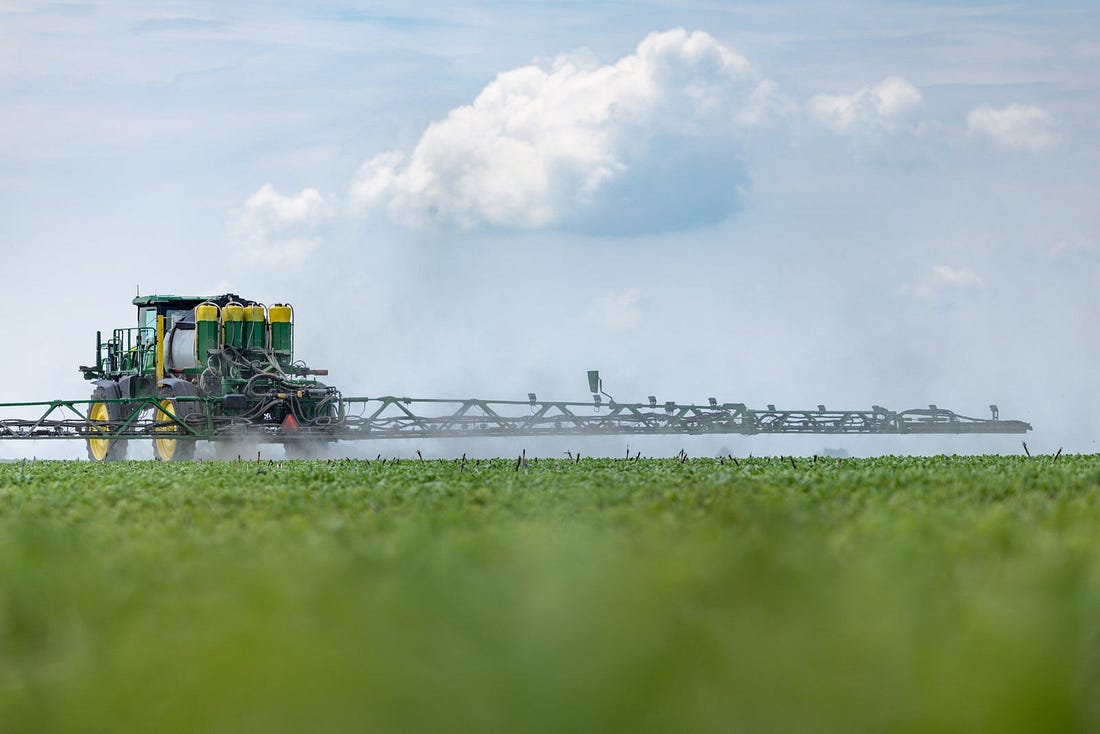
Why I think the opportunity is so large
A field contains thousands of small differences in weeds, soil and growing conditions. Farmers have to manage them across enormous areas, often within a weather window that closes tomorrow. Better decisions can save inputs, improve yields and keep expensive equipment working.
GPS guidance shows how widely useful technology can spread and it demonstrates to me as well that farmers have been willing to change their ways and adjust with the times. USDA found guidance and autosteering on 70% of large U.S. crop farms in 2023. AI takes that further when a camera recognizes a weed and the machine treats it as it passes.

While this is still early, it is already happening commercially. Deere reports that its targeted spraying technology covered more than five million acres in 2025, with customers averaging nearly 50% lower use of non-residual herbicide.
The payoff can be especially powerful because savings flow into the relatively small amount left after a farmer pays the season’s bills. AGCO modeled separate planting, spraying and autonomous harvest-and-tillage combinations on a 6,000-acre Midwest farm, estimating annual net-income improvements of 9%, 9.2% and 14.6% after associated technology investment costs.
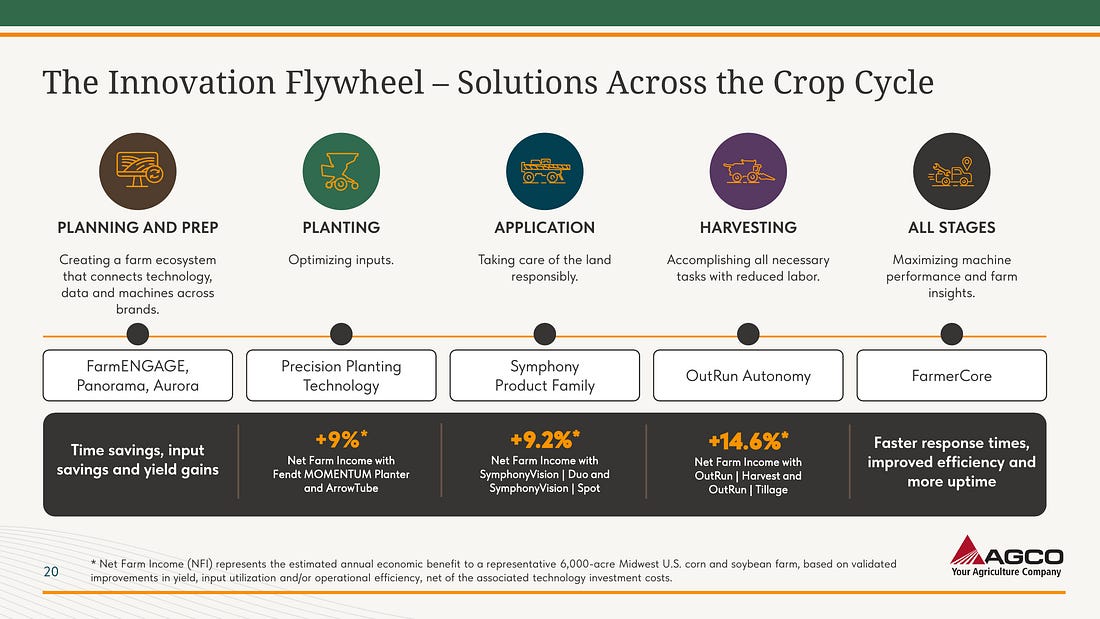
Farmers repeat these operations every season. Technology that reliably improves them has a recurring economic purpose, and farmers can adopt useful pieces as they prove themselves.
What AGCO owns and how it earns
AGCO sells machinery through Fendt, Massey Ferguson and Valtra. Its PTx technology business combines Precision Planting with PTx Trimble, covering equipment upgrades and automation. AGCO owns 85% of PTx Trimble, with Trimble retaining 15%.
This image below will help you visualize the company.
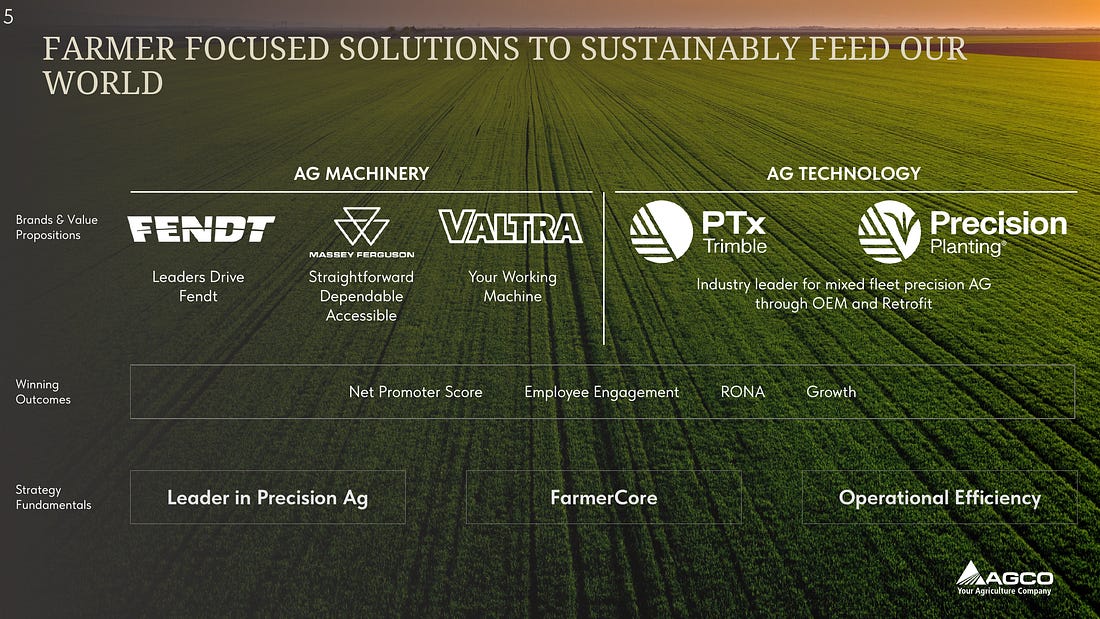
PTx generated about $860 million in 2025, roughly 8.5% of AGCO’s $10.1 billion revenue. Machinery still accounts for most of the business.
Mixed fleets make the opportunity particularly interesting. Management says 65% of PTx revenue comes from non-AGCO machines and about one-third from retrofit, with overlap between those categories. A farmer can improve a planter, then upgrade spraying without replacing the entire fleet. Each successful installation opens the door to another sale.

AGCO earns through hardware, service and selected software fees. Targeted spraying can be purchased without per-acre fees, while autonomy combines hardware with annual payments. That flexibility is important because every farm and every farmer will have different needs.
Five jobs AGCO is working to automate
AGCO’s opportunity runs through the farming season, from preparing the soil to bringing in the crop. Its autonomy roadmap shows how far each application has progressed.

Planting. More consistent seed placement gives the crop a better start. AGCO’s upcoming seed-delivery system even controls which way a seed faces, helping plants emerge more evenly. Commercial availability is expected in late 2026. Autonomous planting remains in development.
Spraying. Cameras identify visible weeds for targeted treatment while a separate application covers the field with preventative protection in the same pass. Farmers can use less of the targeted chemical. This precision-spraying technology is available alongside ongoing development of autonomous spraying.
Fertilizing. Delivering nutrients at the right time is another labor-intensive job. AGCO puts autonomous fertilizing at the alpha stage, meaning early testing.
Tillage. This prepares the soil for planting. A tractor works within predefined boundaries while the farmer monitors it remotely. Management describes overnight operation as a way to free workers and make the same tractor available for another job during the day. AGCO lists autonomous tillage as in production.
Harvesting. A compatible tractor can pull a grain cart autonomously under the harvesting-machine operator’s supervision. The operator calls it over to collect grain, then sends it to an unloading area. A person still empties the cart into the truck.
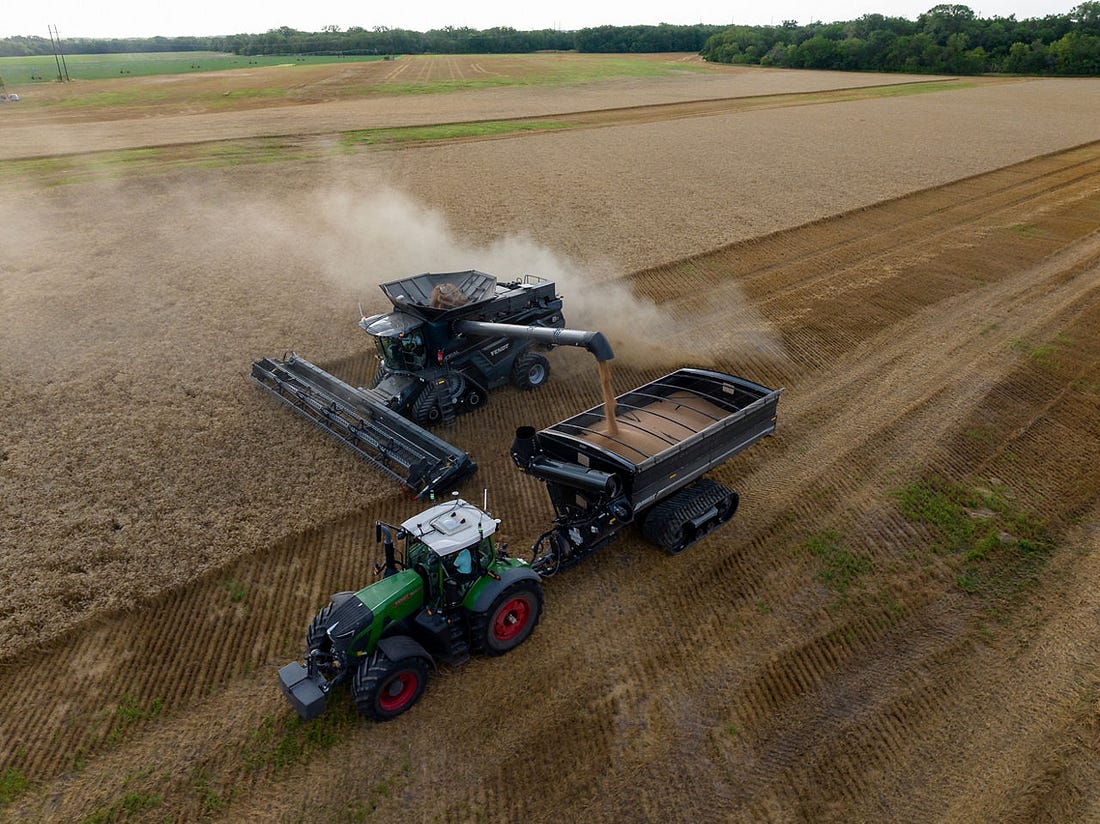
At Technology Day, management reported more than 300,000 acres being worked autonomously. Each installation can also support recurring annual payments as farmers continue using the system.
Each season can make the next one smarter
The planter records what went into the ground, the sprayer records treatment, and the combine measures what came out. Connecting those records could help farmers understand a weak patch and improve next season’s decisions.
I see the longer-term opportunity as a loop in which the farmer identifies a problem, equipment carries out a response, and the next set of records helps show whether it worked. AGCO is bringing supported field records together and adding voice and text tools to make the information easier to use. Dependable recommendations will take several seasons of evidence.

Turning promising products into scale
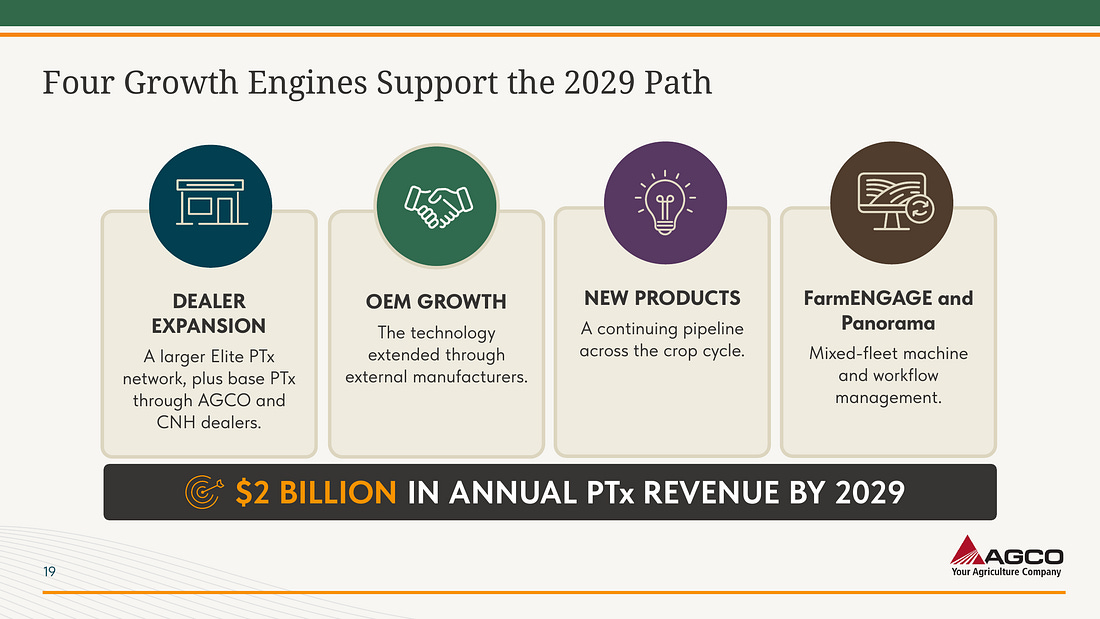
Management reported camera-system sales up 400% from an undisclosed starting base. It also wants to expand from just over 90 dealers offering the full PTx portfolio to several hundred over the next couple of years. More people demonstrating, installing and supporting products can turn early successes into broader adoption.

PTx revenue is expected to be roughly flat around $860 million in 2026, while management targets $2 billion in 2029. That requires about 32% annual growth. New products and broader distribution give it a path, but meaningful acceleration is part of the investment case.
There is also a potential adoption catalyst in Washington. The House-passed farm bill proposes up to 90% cost-sharing for qualifying precision technology used for conservation. Final legislation, funding and approved farmer contracts would be needed. If implemented, it could substantially lower the upfront cost of eligible upgrades.
The machinery business has a nearer-term recovery mechanism too. AGCO has been producing fewer machines than dealers sell to clear excess inventory. Management described South American production roughly 15% below retail. Moving from 85 machines back to 100 would mean 17.6% production growth with flat customer demand. That is regional arithmetic, but it explains how factory activity can recover before farmers start buying more.

What I make of the selloff
AGCO fell 6% on October 7 and 4.5% on October 9. Two developments added uncertainty.
The FTC and USDA opened an industry-wide equipment-market inquiry. It establishes no violation or immediate penalty against AGCO. Changes to dealer restrictions, repair access or service practices could still affect profitability, so it deserves monitoring. But I clearly think the investment thesis is intact (at the right levels) or I wouldn’t be writing this article.
Separately, USDA raised corn-supply estimates and cut its projected season-average price from $4.80 to $4.70 per bushel. That has a more direct effect on farmers’ ability to buy equipment. Cheaper crops increase the appeal of saving inputs while squeezing purchasing power.

The earnings show why price discipline and entry price matters for me. Q2 adjusted EPS rose from $1.35 to $1.43, while adjusted operating profit fell about 21%. Tariff refunds and upfront recognition of future financing income helped the quarter. I want the recovery to show up in operating profit and cash generation.
Financial Modeling + Entry Price
- My buying interest: around $90, versus the October 9 close of $103.- My twelve-month value: about $130 in October 2027, roughly 26% upside from that close and 44% from $90, before dividends.
What I think AGCO is worth
My base case is about $130 over the next twelve months. I estimate roughly $9.80 in adjusted EPS for 2028. Valuing it at 13.5 times earnings.
My 2028 assumptions are roughly $11.4 billion of revenue and a 10.3% adjusted operating margin, supported by a gradual machinery recovery and growing PTx sales. AGCO’s 2026 adjusted EPS guidance is $5.50–$5.75, so there is a meaningful recovery to deliver. Better volumes would spread factory costs, while technology growth would spread development and selling expenses.
Around $90, I would be more interested. The gap to my valuation is wider and gives me more room for a slower recovery. AGCO also carried about $2.15 billion of net debt at June 30. Weak farm spending, competition and execution problems could push the shares below the bear value.
The stock does have meaningful support at that $100 level so I might not get my entry. I tend to lean conservative. But as of right now I want more downside protection.
The longer-term opportunity could be even more attractive though. I do think we are at very early stages of these deployments and I don’t think I can accurately model that far out given current visibility. PTx can sell useful upgrades across mixed fleets, adding more products to each customer’s equipment as the savings become clear. Better connections between planting, spraying and harvest data could make those products more useful each season.
This article reflects my personal research and opinions and is provided for informational and educational purposes only. It is not personalized investment, financial, legal or tax advice, or a recommendation or solicitation to buy or sell any security. It does not account for your financial circumstances, investment objectives, time horizon or risk tolerance.
Any price targets, valuation ranges, financial models, forecasts or investment scenarios are estimates based on assumptions that may prove incorrect. They represent possible outcomes, not promises of future performance. Actual results may differ materially, and a stock can fall below any bear-case valuation discussed. Company guidance and management targets are forward-looking statements, not guaranteed results.
Investing involves risk, including the possible loss of your entire investment. Past performance does not guarantee future results. Thematic baskets and model portfolios are illustrative and may differ from my actual holdings. Unless expressly stated otherwise, any hypothetical performance does not reflect a complete record of actual trades or all transaction costs, taxes, liquidity constraints and execution differences.
I may hold positions in securities discussed and may buy, sell, add to or reduce those positions as my circumstances or views change. My holdings can create financial conflicts of interest. Unless explicitly stated, publication of an article should not be interpreted as notice of a transaction or a complete statement of my portfolio. Any material sponsorship or compensation related to the coverage will be separately disclosed.
I use information I believe to be reliable, but I cannot guarantee its accuracy or completeness. Information, opinions and valuations are current only as of the publication date or the dates specified and may change. Articles may not be updated to reflect subsequent developments.
You are responsible for your own investment decisions. Conduct your own due diligence and consider consulting an appropriately qualified professional before acting on anything discussed here.